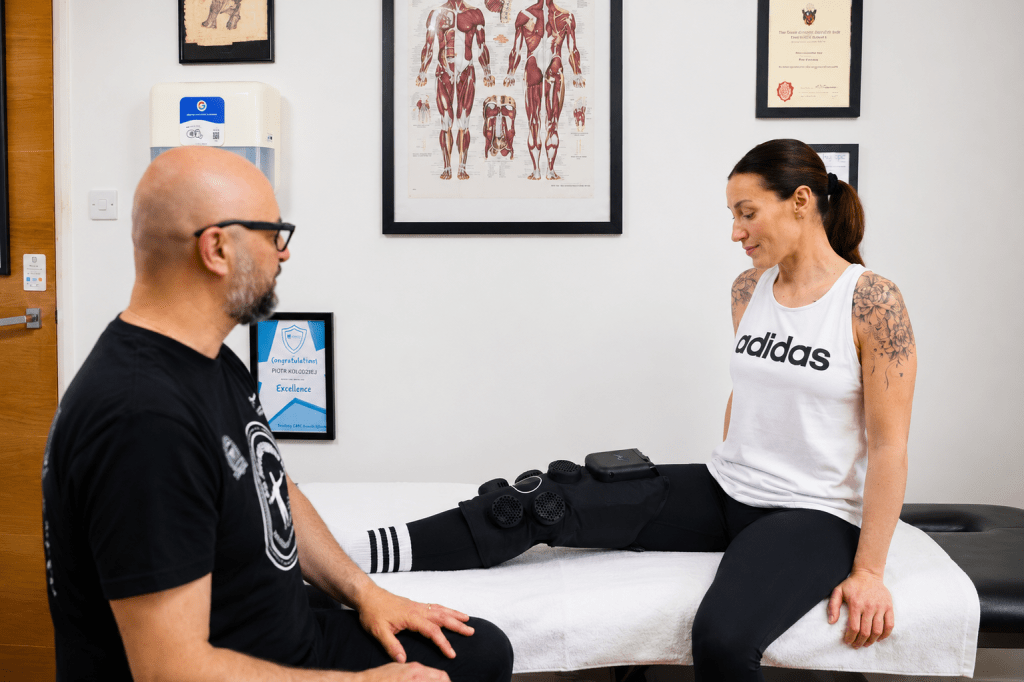
What are Sports Injuries?
Sports injuries are among the most common reasons people seek physiotherapy. They can affect athletes of all levels, from professional competitors to recreational runners, gym users and individuals returning to exercise after a period of inactivity.
Sports injuries may occur suddenly following a traumatic event, such as a fall, collision or awkward movement, or they may develop gradually due to repetitive loading and insufficient recovery.
Most sports injuries involve muscles, tendons, ligaments, joints or bones. Early assessment and appropriate rehabilitation can often help reduce recovery time and improve the likelihood of a successful return to sport.
Common Symptoms
- Pain during sport or exercise
- Swelling
- Reduced strength
- Reduced flexibility
- Difficulty running, jumping or changing direction
- Joint stiffness
- Loss of confidence during activity
- Symptoms that return when training resumes
Common Causes
Sports injuries can occur for many reasons, including:
- Sudden increases in training volume
- Poor recovery between sessions
- Muscle weakness
- Reduced flexibility
- Previous injuries
- Training errors
- Poor movement patterns
- Inadequate conditioning
- Contact injuries
In many cases, sports injuries are caused by a combination of factors rather than a single event.
Do I Need a Scan?
Not necessarily.
Many sports injuries can be accurately assessed through a detailed clinical examination. Imaging may sometimes be useful, particularly if a significant structural injury is suspected, but scans are not required in every case.
Scan findings should always be interpreted alongside symptoms and physical examination findings.
Should I Stop Exercising Completely?
Not always.
One of the biggest mistakes athletes make is either stopping all activity or returning too quickly.
Current evidence suggests that maintaining an appropriate level of activity is often beneficial. Rehabilitation programmes are usually designed to keep you active while allowing injured tissues to recover.
How Physiotherapy Can Help
At PK Physiotherapy in Northampton, every treatment programme begins with a detailed assessment carried out by Piotr Kolodziej, Specialist Physiotherapist with over 30 years of clinical experience.
The aim is to identify the injured structure, understand why the injury occurred and develop a personalised rehabilitation programme designed to help you return safely to your chosen activity.
Treatment Options Available at PK Physiotherapy
Depending on assessment findings, treatment may include:
- Sports Injury Assessment
- Exercise Rehabilitation
- Return to Sport Programmes
- Strength and Conditioning Exercises
- Manual Therapy
- Sports Massage and Soft Tissue Release
- Shockwave Therapy where appropriate
- Therapeutic Ultrasound
- Laser Therapy
- Electrotherapy (IFC and TENS)
- Kinesiology Taping
- Mobility and Flexibility Programmes
- Personalised Home Exercise Plans
When Should I See My GP?
Consider contacting your GP if:
- Symptoms are worsening significantly
- You have concerns about a fracture
- Pain is associated with systemic symptoms such as fever or unexplained weight loss
- Symptoms are not responding to treatment
Red Flags
Seek urgent medical attention if:
- You are unable to weight bear following an injury
- Significant deformity is present
- Severe swelling develops rapidly
- A fracture or dislocation is suspected
- Symptoms are associated with neurological changes
Frequently Asked Questions
How soon should I start physiotherapy after a sports injury? In many cases, early assessment can help guide recovery and prevent unnecessary delays.
Can I continue training? This depends on the injury. In many cases training can be modified rather than stopped completely.
How long will recovery take? Recovery times vary depending on the type and severity of injury, as well as individual factors.