




Shoulder
Pain
Shoulder pain can make even simple daily activities difficult. Whether the problem started gradually or after an injury, an accurate diagnosis from PK Physiotherapy is the first step towards recovery.
Common Shoulder Pain Conditions:
- Rotator cuff injuries
- Frozen shoulder
- Shoulder impingement
- Tendinopathy
- Bursitis
- Shoulder instability
- Post-operative Rehabilitation
With over 30 years of physiotherapy experience, PK Physiotherapy provides one-to-one assessment and treatment for shoulder pain in Northampton.
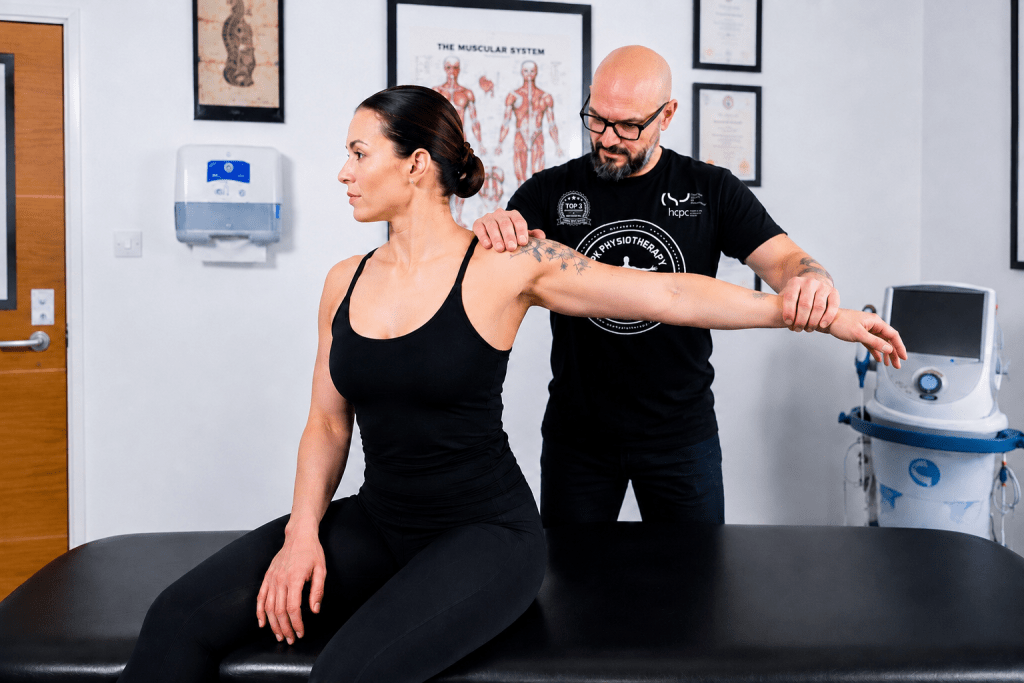
If shoulder pain is affecting your sleep, work, sport or daily activities, book your assessment today and start your personalised recovery programme at PK Physiotherapy.
CASE STUDY: SHOULDER PAIN
Patient: Greg, 39
1 The Problem
Grzegorz attended PK Physiotherapy after several months of shoulder pain that was beginning to affect both work and exercise. Simple activities such as reaching overhead, lifting objects and training at the gym had become increasingly uncomfortable. The pain was also disturbing his sleep and limiting his confidence when using the arm.
Like many patients, Grzegorz initially hoped the problem would settle on its own. Unfortunately, symptoms continued to worsen, prompting him to seek professional help.
2 Assessment Findings
A detailed physiotherapy assessment identified shoulder dysfunction involving the rotator cuff region. Shoulder strength was reduced and several movements reproduced familiar symptoms. No signs of serious pathology were identified and surgery was not considered necessary.
3 Treatment
Treatment focused on reducing pain, improving shoulder function and restoring strength.
Grzegorz received:
- Shockwave Therapy
- Manual therapy
- Electrotherapy
- Progressive strengthening exercises
- Mobility exercises
- Personalised home exercise programme
4 Outcome
Pain gradually reduced throughout treatment. Shoulder strength improved, sleep became more comfortable and confidence returned. Grzegorz successfully returned to normal daily activities and gym training without significant symptoms.
Patient Perspective
“I had been worried that something was seriously wrong with my shoulder. The treatment plan was easy to follow and the improvement was much better than I expected.”