




Piriformis
Syndrome
Targeted treatment for deep gluteal pain, hip stiffness and sciatica-like symptoms.
Common SYMPTOMS Treated:
- Deep gluteal pain
- Sciatica-like symptoms
- Hip stiffness
- Pain when sitting
- Sports injuries
- Muscle tightness
If buttock pain or sciatic-type symptoms are affecting your daily activities, book your assessment today and start your personalised recovery programme at PK Physiotherapy.
CASE STUDY: Piriformis Syndrome
Patient: Patricia, 61
1 The Problem
Patricia, aged 61, came to PK Physiotherapy with persistent pain deep in her right buttock that had gradually worsened over several months. The pain often radiated down the back of her thigh, especially after prolonged sitting, driving or walking longer distances.
She was concerned that she had sciatica, as the symptoms occasionally travelled towards the knee. Painkillers provided only temporary relief and she had started avoiding many of her usual daily activities because of the discomfort.
Before attending PK Physiotherapy, Patricia had already received treatment from other healthcare professionals. Unfortunately, the techniques used were too aggressive for the irritated tissues and consistently aggravated her symptoms after each session. As a result, her recovery was delayed and the condition became more persistent, making rehabilitation longer than it would otherwise have been.
2 Assessment Findings
Following a detailed physiotherapy assessment, I diagnosed Piriformis Syndrome.
The assessment revealed increased tension and tenderness within the piriformis muscle together with reduced flexibility of the deep hip external rotators. There was weakness of the gluteus medius and gluteus maximus, reduced hip control during functional movements and tightness affecting the surrounding muscles, including:
- Piriformis
- Gluteus Medius
- Gluteus Maximus
- Obturator Internus
- Gemellus Superior
- Gemellus Inferior
Lumbar spine assessment and neurological testing did not suggest lumbar nerve root compression, making true sciatica unlikely.
3 Treatment
Patricia received an individual treatment programme which included:
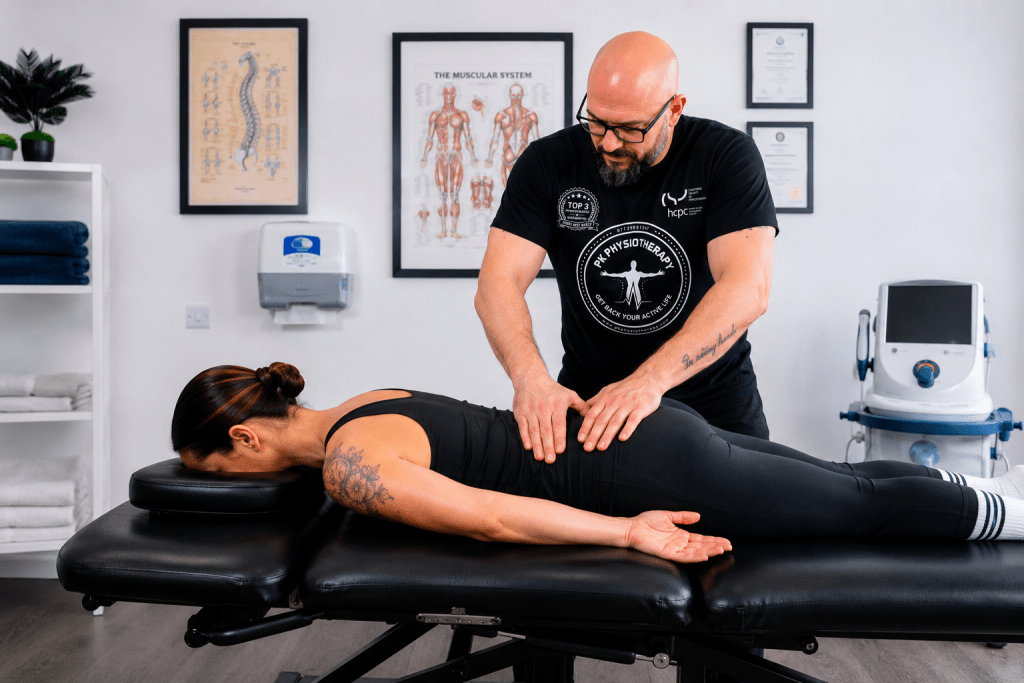
- Manual therapy using gentle, progressive techniques to calm the irritated tissues
- Shockwave Therapy
- Interferential Therapy (IFC)
- Progressive stretching exercises for the piriformis and hip muscles
- Strengthening exercises for the gluteal muscles and core stability
- Functional movement retraining
- Education on posture, sitting tolerance, activity modification and long-term self-management
4 Outcome
Once the irritated tissues had settled, Patricia made steady progress. She gradually regained the ability to sit comfortably, walk longer distances and return to her normal daily activities without significant pain.
By the end of her rehabilitation, her buttock pain had resolved, the radiating leg symptoms had disappeared and she had regained confidence in movement. She continues to perform her home exercise programme regularly and has remained symptom-free since completing treatment.