What is Joint Mobilisation and Manipulation?
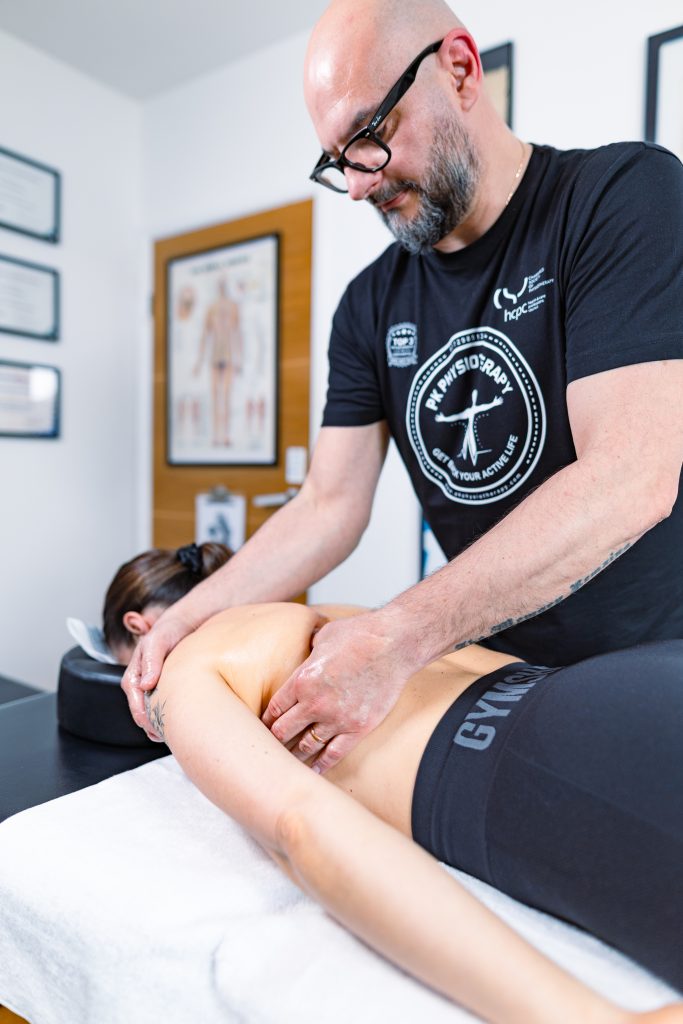
Joint Mobilisation and Manipulation are hands-on manual therapy techniques used to improve joint movement, reduce stiffness and help relieve pain. These techniques may be applied to the spine and peripheral joints where clinically appropriate following a detailed physiotherapy assessment.
Treatment is always tailored to the individual and is used alongside exercise rehabilitation, movement education and self-management strategies to help restore function and support long-term recovery.
How Does Joint Mobilisation and Manipulation Work?
Joint mobilisation involves gentle, controlled movements applied to a joint to improve mobility and reduce stiffness.
Joint manipulation involves a specific, skilled manual technique applied to a joint with the aim of improving movement and reducing symptoms where appropriate.
These techniques are commonly used by physiotherapists as part of a wider rehabilitation programme and are not intended to replace exercise or long-term self-management.
What Conditions Can Benefit?
Joint Mobilisation and Manipulation may be considered for:
Suitability depends on assessment findings and individual circumstances.
Benefits May Include
- Improved joint mobility
- Reduced pain and stiffness
- Easier movement during daily activities
- Improved physical function
- Increased confidence with movement
Is Joint Manipulation Safe?
For most patients, joint mobilisation and manipulation are safe when performed by a suitably qualified healthcare professional following a thorough assessment.
Not all patients are suitable candidates and alternative treatment approaches may sometimes be recommended.
Does Joint Manipulation Fix the Problem?
Not usually.
Manual therapy can be helpful for reducing pain and improving movement, but long-term recovery often depends on exercise rehabilitation, movement education and addressing the underlying cause of symptoms.
Frequently Asked Questions
Will my joint click? Sometimes a clicking or popping sound may occur during manipulation. This is normal and is not thought to represent bones moving back into place.
Do I need manipulation? Not necessarily. Many patients recover successfully without manipulation. Treatment recommendations are based on individual assessment findings.
Can mobilisation and manipulation be combined with other treatments? Yes. They are frequently combined with exercise rehabilitation, Shockwave Therapy, Electrotherapy, Sports Massage and other physiotherapy treatments.