


Sciatica
PK Physiotherapy offer targetted treatment to relieve nerve pain, reduce inflammation and restore mobility.
Conditions We Treat:
- Lower back pain
- Radiating leg pain
- Numness & tingling
- Muscle weakness
- Sitting intolerance
- Difficulty walking
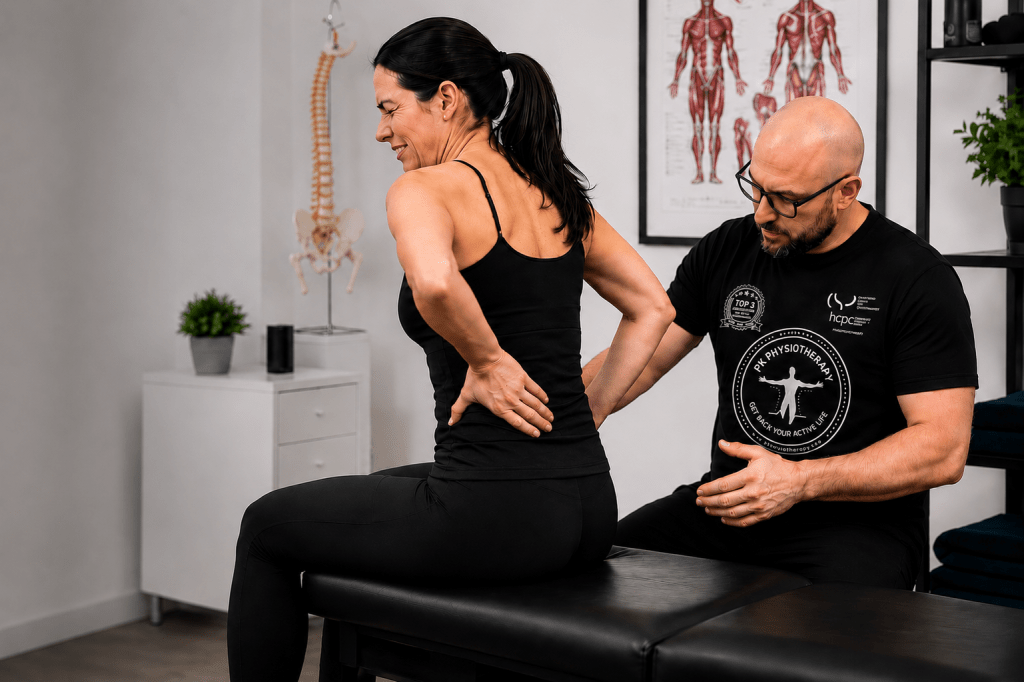
If sciatica is affecting your work, sleep, mobility or quality of life, book your assessment today and start your personalised recovery programme at PK Physiotherapy.
CASE STUDY: SCIATICA
Patient: Josh
1 The Problem
Josh, aged 29, works as a warehouse operative, where his job involves frequent heavy lifting, repetitive bending, twisting and working in cold conditions with regular exposure to draughts.
He initially developed lower back pain but hoped it would settle on its own. Unfortunately, over the following three months the pain gradually became unbearable and started radiating from his lower back into his buttock, down the back of his leg and into his calf. He also experienced intermittent numbness and tingling, making both work and everyday activities increasingly difficult.
Despite the severity of his symptoms, Josh delayed seeking physiotherapy, hoping the problem would improve naturally.
2 Assessment Findings
Following a detailed physiotherapy assessment, the clinical findings strongly suggested lumbar nerve root irritation involving the L5/S1 level, resulting in sciatica.
- Positive clinical findings included:
- Positive Straight Leg Raise (SLR) Test
- Positive Slump Test
- Reduced lumbar range of movement
- Increased muscle spasm affecting the lumbar paraspinal muscles and gluteal muscles
- Pain radiating into the calf with intermittent numbness, consistent with L5/S1 nerve root irritation
Neurological examination showed no signs of severe motor deficit or cauda equina syndrome, making conservative physiotherapy the appropriate initial treatment while awaiting MRI results.
3 Treatment
Josh received an individual rehabilitation programme which included:
- Gentle passive lumbar spine stretching
- Interferential Therapy (IFC)
- Infrared Therapy
- Progressive mobility and strengthening exercises
- Neural mobility exercises (nerve gliding)
- Education regarding posture, lifting techniques and activity modification
- A personalised home exercise programme
Because Josh’s work involved repeated heavy lifting, I also provided him with a physiotherapy report recommending light duties for 12 weeks. His employer was very supportive and temporarily removed all manual lifting tasks from his workload. This significantly reduced the mechanical stress on his lumbar spine, allowing the irritated nerve root and surrounding tissues to settle and making the rehabilitation programme far more effective.
4 Outcome
During rehabilitation, Josh’s symptoms steadily improved. Muscle spasm reduced, his lower back became more mobile and the radiating leg pain became progressively less frequent.
Approximately one month after starting treatment, Josh received the results of his MRI scan, which confirmed the clinical diagnosis made during his initial physiotherapy assessment. The scan demonstrated a lateral lumbar disc protrusion at the L5/S1 level, causing irritation of the corresponding nerve root. At that stage, surgery was not considered appropriate, and conservative management remained the recommended treatment.
Although Josh originally attended physiotherapy simply hoping to reduce his pain enough to return to work, his progress exceeded expectations. The temporary modification of his work duties gave his back the opportunity to recover while physiotherapy addressed the underlying problem.
After only four treatment sessions, his symptoms had reduced dramatically. The severe constant pain had become only occasional, the muscle tightness had almost completely resolved and he was able to return to work with significantly greater comfort and confidence.
He completed the recommended period of light duties before gradually returning to his normal workload. He was discharged with a progressive home exercise programme and advice on safe lifting techniques, spinal mobility and long-term back care to reduce the risk of future flare-ups.