What is Kinesiology Taping?
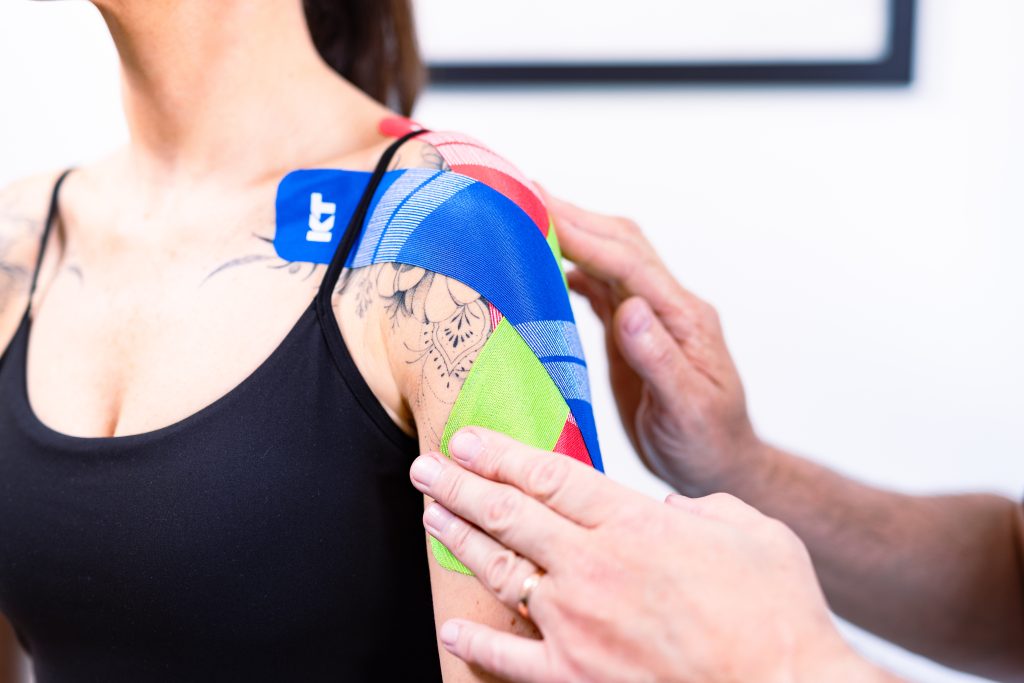
Kinesiology Taping is a treatment technique that uses specially designed elastic tape applied to the skin. It is commonly used in physiotherapy, sports rehabilitation and injury management to support movement, improve body awareness and assist with symptom management.
Unlike rigid sports tape, kinesiology tape is flexible and allows normal movement while remaining in place during everyday activities and exercise.
At PK Physiotherapy in Northampton, Kinesiology Taping is used as part of a comprehensive rehabilitation programme rather than as a standalone treatment.
What Conditions Can Kinesiology Taping Help With?
Kinesiology Taping may be used as part of the management of:
Suitability depends on the condition being treated and individual assessment findings.
How Does Kinesiology Taping Work?
The exact mechanisms are still being researched. It is thought that kinesiology tape may influence sensory feedback from the skin and surrounding tissues.
Some patients report improvements in comfort, body awareness and confidence during movement when tape is applied as part of a wider rehabilitation programme.
Does Kinesiology Taping Fix the Problem?
No.
Kinesiology Taping should be viewed as a supportive treatment rather than a cure.
Long-term recovery usually depends on addressing the underlying cause of symptoms through rehabilitation, exercise, education and appropriate loading strategies.
Is Kinesiology Taping Supported by Research?
Research findings are mixed and vary depending on the condition being treated.
Some studies suggest that kinesiology taping may provide short-term improvements in pain and function for certain patients. However, it is generally considered an adjunct to rehabilitation rather than a primary treatment.
Will the Tape Restrict My Movement?
No.
Unlike traditional sports taping, kinesiology tape is designed to move with the body. Most patients can continue normal daily activities and exercise while wearing the tape.
How Long Can the Tape Stay On?
In most cases the tape can remain in place for several days, depending on skin sensitivity, activity levels and individual response.
Your physiotherapist will provide advice regarding tape care and removal.
Frequently Asked Questions
Can I shower with kinesiology tape? Yes. Kinesiology tape is designed to tolerate normal washing and showering.
Can kinesiology tape replace exercise? No. Exercise rehabilitation remains one of the most important components of recovery for most musculoskeletal conditions.
Can anyone wear kinesiology tape? Most people can tolerate kinesiology tape well. However, it may not be suitable for certain skin conditions or allergies.