

Shockwave Therapy
Whether you’re a runner, footballer, gym enthusiast or simply enjoy staying active, injuries can quickly stop you from doing what you love.
At PK Physiotherapy, treatment focuses on identifying the cause of the problem, reducing pain and restoring strength, mobility and confidence.
Common Shockwave Therapy Treatments:
- Muscle strains and tears
- Hamstring injuries
- Quadriceps injuries
- Calf injuries
- Ankle sprains
- Knee ligament injuries
- Tendinopathy
- Running injuries
- Information
- Treatment
- Rehabilitation
What is Shockwave Therapy?
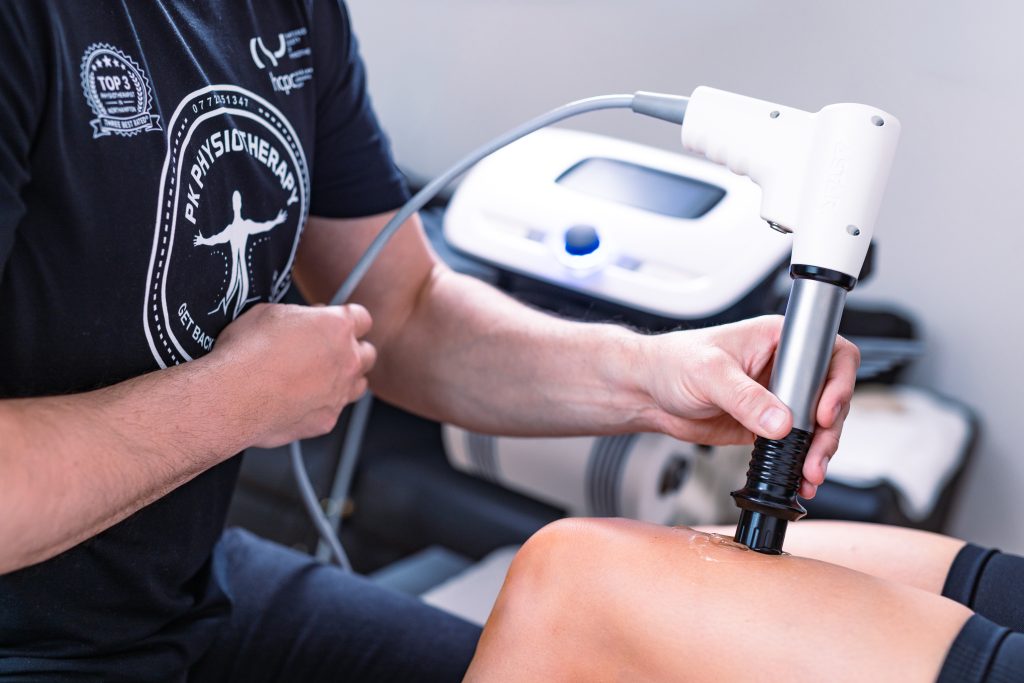
Shockwave Therapy is a non-invasive treatment used to help manage a variety of musculoskeletal conditions, particularly chronic tendon and soft tissue problems. The treatment uses high-energy acoustic waves delivered through the skin to stimulate the body’s natural healing processes.
Shockwave Therapy is commonly used when symptoms have been present for several months and have not responded fully to exercise-based rehabilitation, rest or other conservative treatments.
At PK Physiotherapy in Northampton, Shockwave Therapy is used as part of a comprehensive rehabilitation programme rather than as a standalone treatment.
What Conditions Can Shockwave Therapy Help With?
Shockwave Therapy may be considered for a range of conditions including:
Tendon Problems
- Achilles Tendinopathy
- Tennis Elbow
- Golfer’s Elbow
- Patellar Tendinopathy
- Rotator Cuff Tendinopathy
- Hamstring Tendinopathy
Foot Problems
- Plantar Fasciitis
- Chronic Heel Pain
- Ball of Foot Pain (selected cases)
Shoulder Problems
- Calcific Tendinopathy
- Persistent Shoulder Pain
- Rotator Cuff Related Pain
Other Conditions
- Greater Trochanteric Pain Syndrome
- Chronic Soft Tissue Injuries
- Persistent Musculoskeletal Pain
Does Shockwave Therapy Really Work?
Shockwave Therapy has been recommended by NICE for selected musculoskeletal conditions and is widely used throughout physiotherapy, sports medicine and orthopaedics.
Research suggests that some patients with chronic tendon and heel pain conditions may benefit from Shockwave Therapy, particularly when it is combined with an appropriate exercise programme.
Like any treatment, results vary between individuals and no treatment can guarantee success.
Does Shockwave Therapy Replace Exercise?
No.
For most tendon-related conditions, exercise remains one of the most important components of rehabilitation.
Shockwave Therapy is often used alongside strengthening exercises, mobility work, activity modification and rehabilitation programmes designed to improve long-term outcomes.
Is Shockwave Therapy Painful?
Most patients describe Shockwave Therapy as uncomfortable rather than painful. The sensation varies depending on the area being treated and the sensitivity of the tissues involved.
Treatment settings can usually be adjusted to maintain patient comfort while still delivering an effective treatment dose.
How Many Sessions Will I Need?
Most treatment programmes involve between three and six sessions, although this varies depending on the condition, duration of symptoms and individual response to treatment.
Your physiotherapist will discuss the most appropriate treatment plan following assessment.
Do I Need a Scan Before Shockwave Therapy?
Not necessarily.
Many conditions suitable for Shockwave Therapy can be diagnosed through a detailed clinical assessment. Imaging may occasionally be helpful in more complex cases but is not always required.
When Might Shockwave Therapy Not Be Suitable?
Shockwave Therapy may not be appropriate in certain circumstances including:
- Active infection
- Certain bleeding disorders
- Tumours in the treatment area
- Pregnancy (certain treatment areas)
- Recent steroid injection (depending on timing)
A full assessment will determine whether Shockwave Therapy is appropriate for your condition.
Frequently Asked Questions
In many cases yes, although activity modification may be recommended depending on the condition being treated.
This depends on your diagnosis and stage of rehabilitation. Your physiotherapist will advise accordingly.
There is no single treatment that is best for everyone. Treatment recommendations should always be based on individual assessment findings.
When delivered by a trained healthcare professional, Shockwave Therapy is generally considered safe and well tolerated.
Why Choose PK Physiotherapy?
- Over 30 years of physiotherapy experience
- One-to-one appointments
- Evidence-based treatment
- Modern Shockwave Therapy equipment
- Personalised rehabilitation programmes
- Convenient online booking
- Northampton clinic location
If you would like to find out whether Shockwave Therapy may be suitable for your condition, book your assessment today at PK Physiotherapy.