


Back
Pain
Back pain can affect your work, sleep and quality of life. PK Physiotherapy can identify the source and create a plan that works for you.
CONDITIONS WE Treat:
- Acute back pain
- Chronic back pain
- Sciatica
- Disc-related pain
- Facet joint dysfunction
- Sacroiliac joint pain
- Muscle stiffness and strain
- Postural back pain
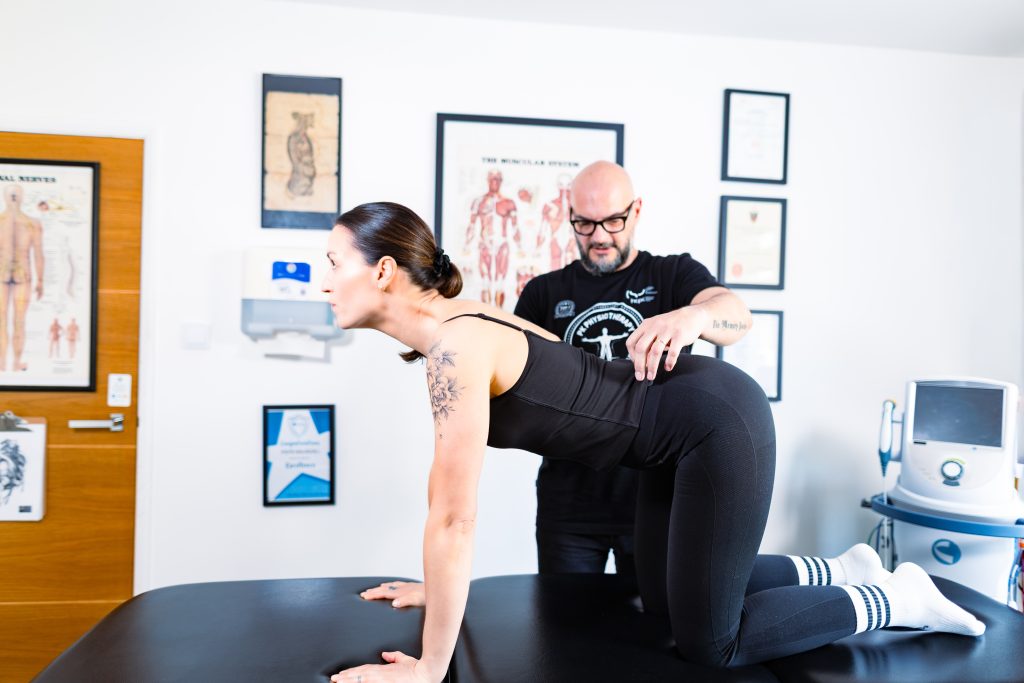
Don’t let back pain stop you doing the things you enjoy. Book your assessment today and start your personalised recovery programme at PK Physiotherapy.
CASE STUDY: CHRONIC BACK PAIN & SCIATICA
Patient: Paul, 44, Builder
1 The Problem
Paul, a self-employed builder, attended PK Physiotherapy with persistent low back pain and leg symptoms that had gradually begun to affect both his work and quality of life. Tasks such as lifting materials, working at low levels and spending long days on building sites had become increasingly difficult.
The pain was beginning to affect his confidence, and he was concerned that he might eventually have to stop doing the work he enjoyed.
2 Assessment Findings
Clinical assessment suggested mechanical low back pain with sciatic nerve irritation. Mobility was restricted and muscle tightness was present. Importantly, no serious spinal pathology or red flags were identified.
3 Treatment
Treatment focused on reducing pain, improving mobility and helping Paul return safely to full work duties.
Paul received:
• Comprehensive physiotherapy assessment
• Education and reassurance
• Exercise rehabilitation programme
• Manual therapy
• Electrotherapy
• Progressive return-to-work programme
4 Outcome
Pain levels reduced significantly and mobility improved. Paul gradually returned to full work duties and reported increased confidence with lifting, bending and everyday physical activities.
Patient Perspective
“I thought my back would never improve. The treatment helped me understand the problem and gave me confidence to get moving again.”