

Living with Pain That Just Won’t Go Away?
If you’ve been struggling with heel pain, Achilles tendon pain, tennis elbow or long standing shoulder pain, you’ve probably searched online for every possible treatment. Rest, painkillers, stretching, injections and massage may provide temporary relief, yet the pain often returns. Shockwave Therapy is not a miracle cure, but for carefully selected patients with chronic tendon disorders it has good evidence supporting its use when combined with an appropriate rehabilitation programme.
What Is Shockwave Therapy?
Shockwave Therapy uses high energy acoustic waves rather than electricity. These waves stimulate biological activity within injured tissue and may promote tendon remodelling, improve blood flow, reduce pain sensitivity and support recovery over time.
Why Doesn’t Every Tendon Heal Naturally?
Tendons have a relatively poor blood supply compared with muscles. Chronic overload may lead to tendinopathy, where the normal healing response becomes disrupted. In these cases, simply resting or taking painkillers often fails to resolve the underlying problem.
Shockwave Therapy Is Only One Part of Treatment
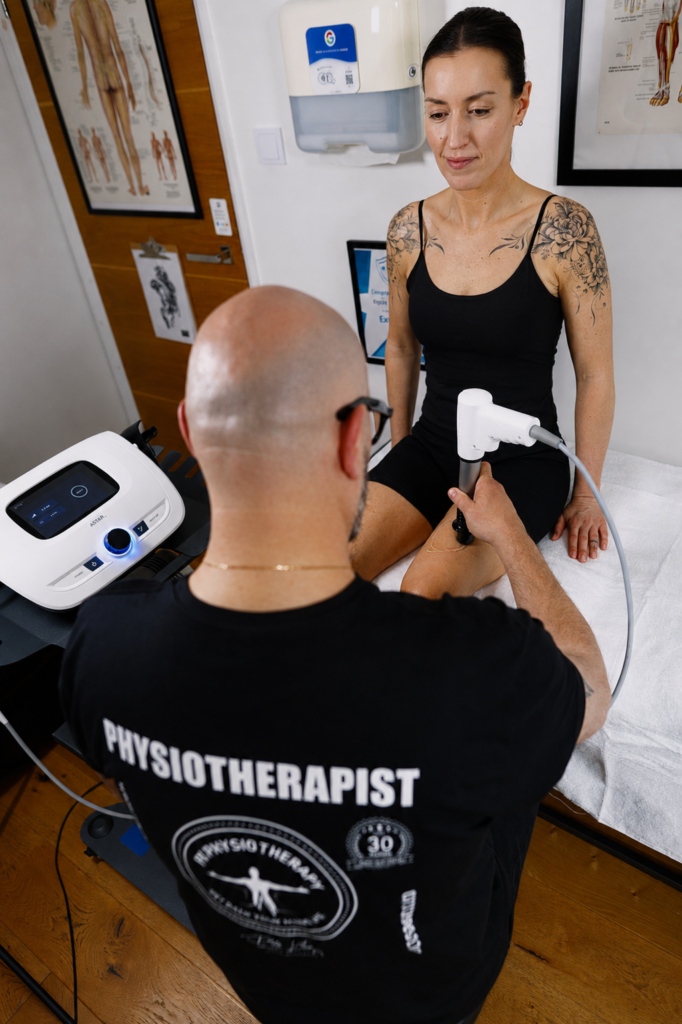
At PK Physiotherapy, Shockwave Therapy is never used as a standalone solution. Every patient receives a full assessment followed by an individual treatment plan that may include exercise therapy, education, manual therapy and progressive return to activity.
How Does Shockwave Therapy Work?
Shockwave therapy creates a controlled mechanical stimulus within the affected tissue. This is believed to trigger a cascade of biological responses including increased cellular activity, improved local blood supply and stimulation of collagen remodelling. The treatment does not instantly repair a damaged tendon. Instead, it encourages the body to restart a healing response that has often stalled in chronic tendinopathy.
Which Conditions Respond Best?
Evidence is strongest for chronic plantar fasciitis, mid portion Achilles tendinopathy, calcific rotator cuff tendinopathy and selected cases of lateral epicondylitis. Patients with symptoms lasting longer than three months often respond better than those with acute injuries, particularly when shockwave therapy is combined with a structured strengthening programme.
What Does the Research Say?
Current systematic reviews suggest that extracorporeal shockwave therapy can improve pain and function in carefully selected patients with chronic tendon disorders. The degree of improvement varies between conditions and treatment protocols, which is why a correct diagnosis remains essential before starting treatment.
What Does NICE Say?
The National Institute for Health and Care Excellence has published interventional guidance covering the use of extracorporeal shockwave therapy for several musculoskeletal conditions. NICE concludes that the procedure may be offered with appropriate clinical governance and patient selection while recognising that the strength of evidence differs between conditions. This reflects modern evidence based practice rather than a one treatment fits all approach.
Who Is Not Suitable?
Shockwave therapy may not be appropriate if there is an active infection, a malignant tumour within the treatment area, certain bleeding disorders or pregnancy over the treatment site. A full physiotherapy assessment is always carried out before treatment begins.
What Happens During Your First Appointment?
Your first visit always starts with a detailed physiotherapy assessment rather than immediate treatment. We discuss your symptoms, medical history, aggravating activities and previous treatments. A physical examination helps identify the exact structure responsible for your pain. Only if shockwave therapy is appropriate will it be recommended as part of your rehabilitation plan.
What Does a Shockwave Session Feel Like?
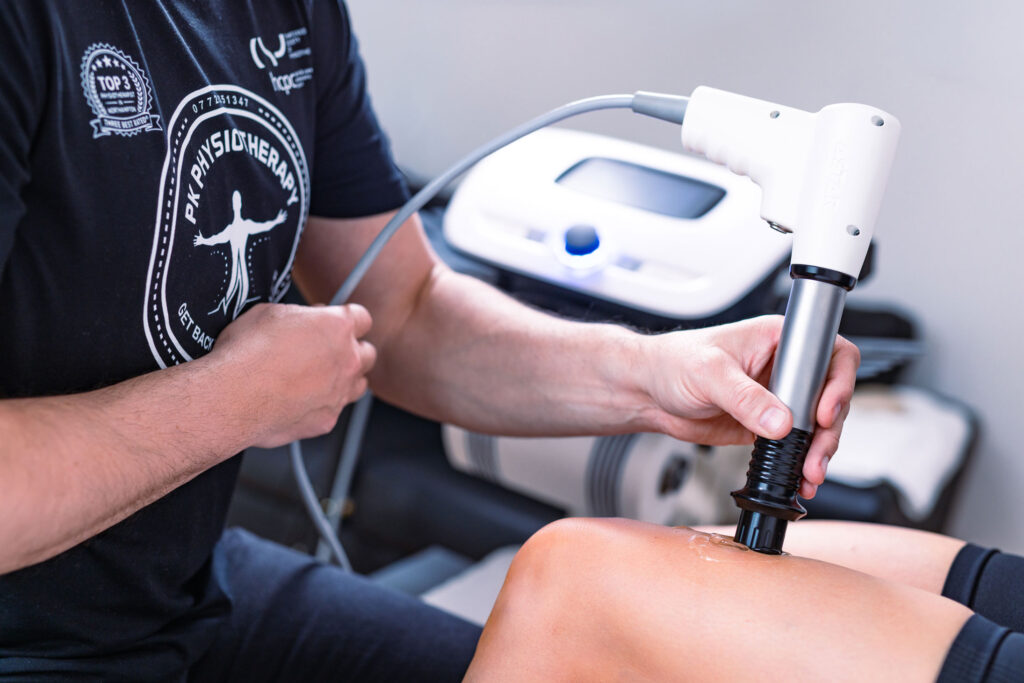
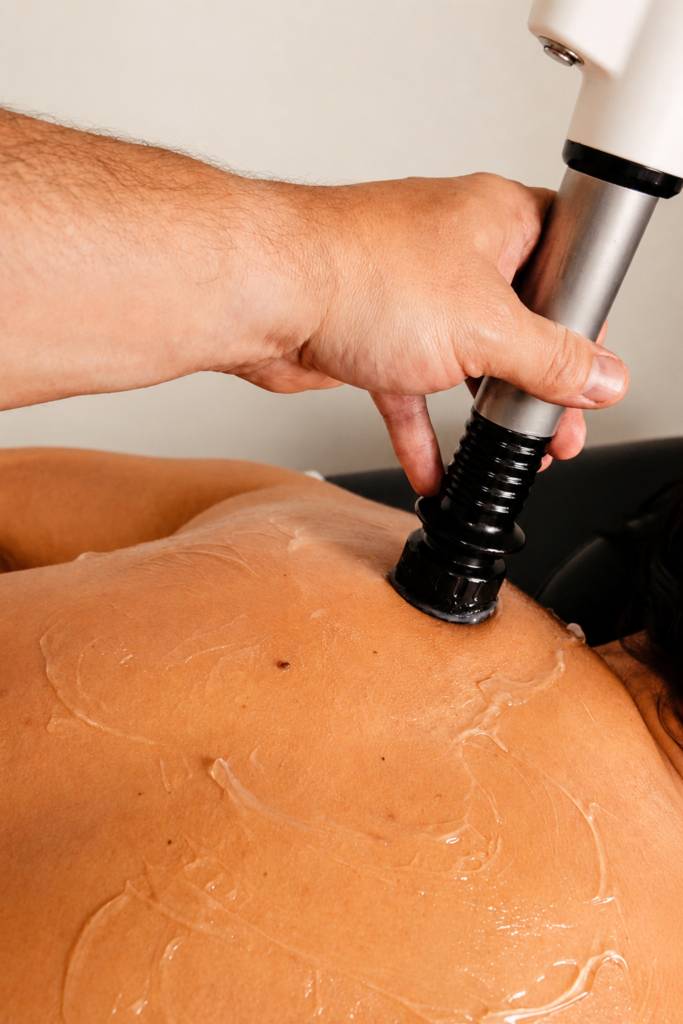
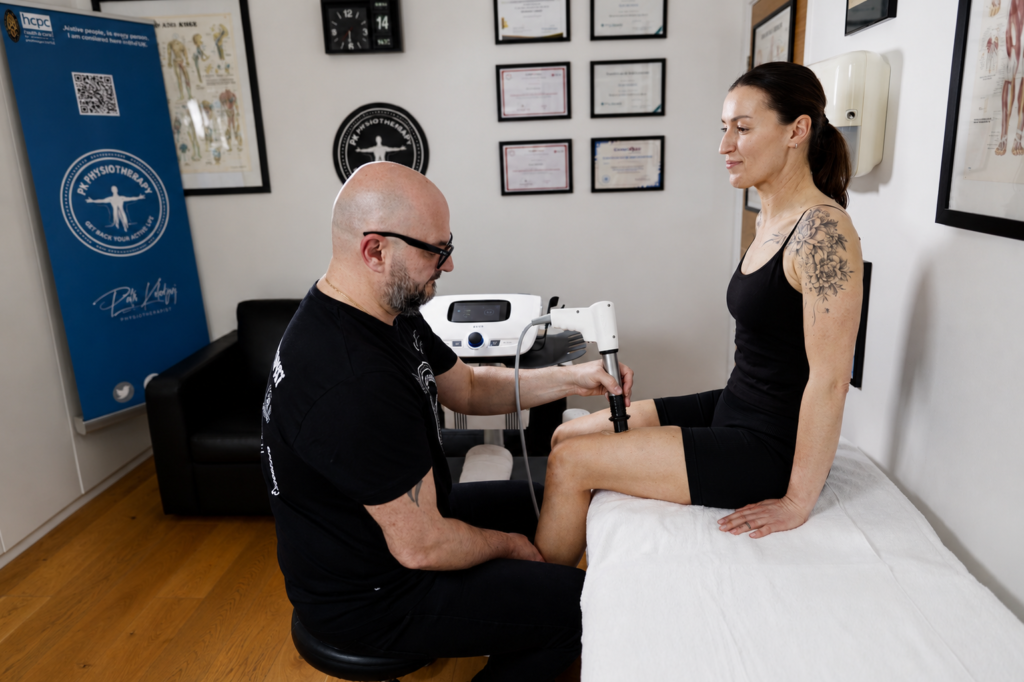
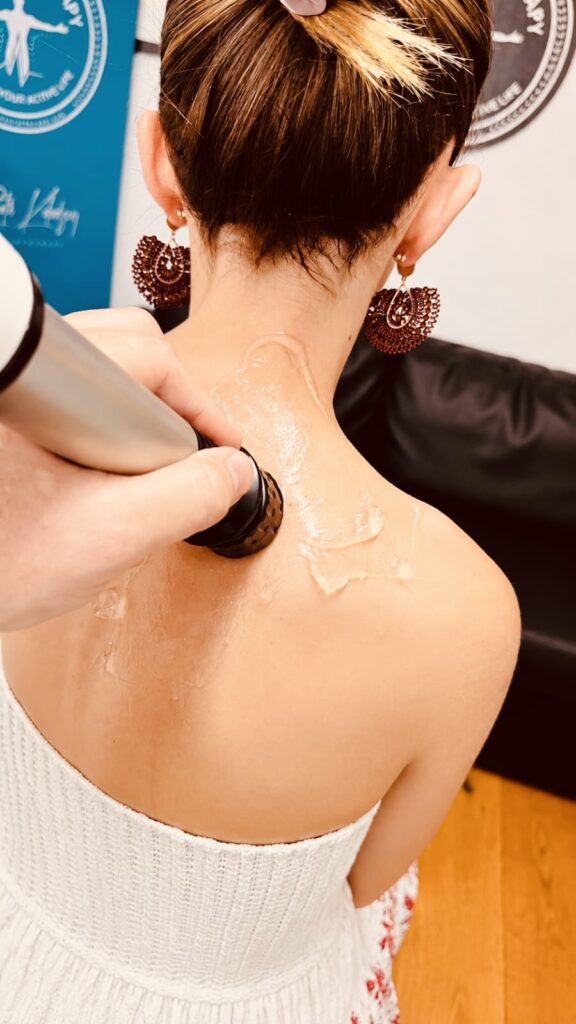
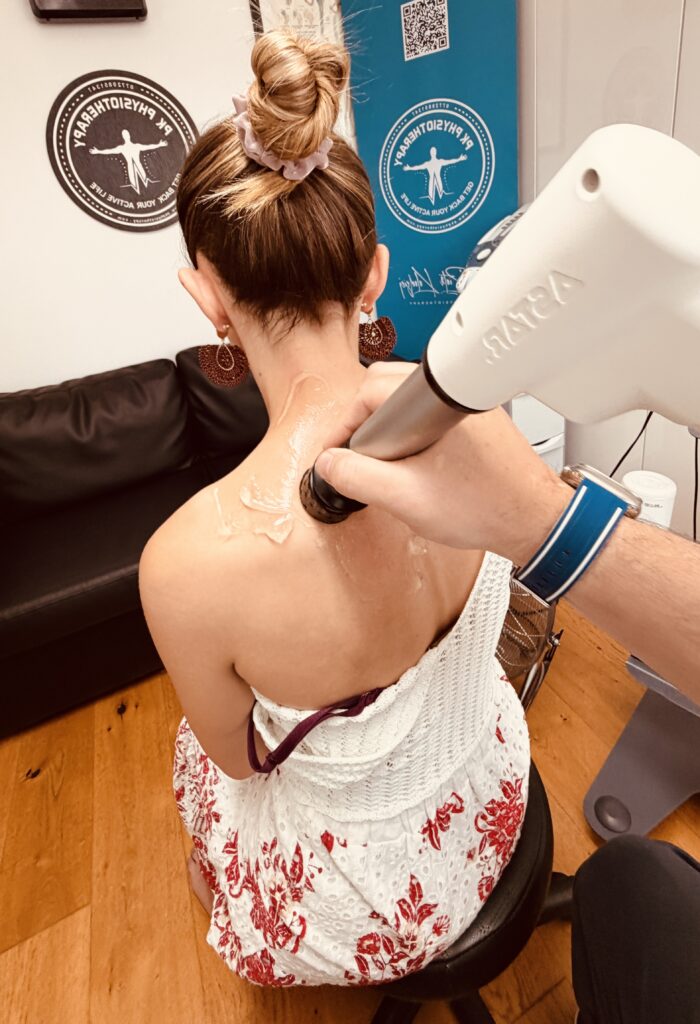
A gel is applied to the skin before the treatment head is positioned over the affected area. Acoustic pulses are then delivered for several minutes. Most patients describe the sensation as uncomfortable rather than painful. The intensity can be adjusted throughout the session to ensure it remains tolerable.
How Many Sessions Will I Need?
Most chronic tendon conditions respond best to a course of three to six sessions, usually performed one week apart. This varies depending on the diagnosis, symptom duration and individual healing response. Improvement is often gradual and may continue for several weeks after the final treatment.
When Will I Notice Results?
Some patients report reduced pain after the first or second session, while others notice meaningful improvement only after completing the full course. Tendon healing is a biological process that takes time, so patience and adherence to your rehabilitation programme are essential.
Case Study 1 – Chronic Achilles Tendinopathy
A 45 year old recreational runner attended PK Physiotherapy after six months of persistent Achilles pain. He had stopped running, completed online exercise programmes and tried anti inflammatory medication without lasting success. Assessment demonstrated mid portion Achilles tendinopathy with reduced calf strength and pain during single leg heel raises. A rehabilitation programme combining progressive loading exercises, activity modification and a course of shockwave therapy was started. After six weeks his pain had reduced significantly, walking was comfortable and he gradually returned to running. By three months he was training again without limiting his weekly mileage.
Are There Any Side Effects?
Shockwave therapy is considered a safe treatment when used appropriately. The most common side effects are temporary soreness, mild redness, slight swelling or bruising around the treated area. These symptoms usually settle within a few days and rarely interfere with normal daily activities.
What Should I Do After Treatment?
Patients are usually encouraged to remain active but avoid unusually heavy loading of the treated tendon for the first 48 hours. Your physiotherapist will explain when to continue strengthening exercises and when to gradually return to sport or work.
Common Mistakes After Shockwave Therapy
The biggest mistake is expecting the treatment alone to solve the problem. Ignoring rehabilitation exercises, returning to sport too quickly or repeatedly overloading the tendon can delay recovery. Long term improvement depends on combining shockwave therapy with appropriate rehabilitation.
Case Study 2 – Chronic Plantar Fasciitis
A 56 year old teacher attended PK Physiotherapy with an eight month history of severe heel pain. The first few steps every morning were extremely painful and standing during lessons had become increasingly difficult. Previous insoles and stretching exercises had provided only temporary relief. Assessment confirmed chronic plantar fasciitis. Treatment included shockwave therapy, calf strengthening, plantar fascia loading exercises, footwear advice and gradual activity modification. After four sessions the morning pain had reduced noticeably. By the end of the treatment programme she was able to walk comfortably, stand for a full working day and return to regular weekend walks with her family.
Frequently Asked Questions
- Can I drive home after treatment? Yes, in almost all cases.
- Can I continue exercising? Usually yes, but heavy loading may need to be reduced temporarily.
- Does private medical insurance cover shockwave therapy? This depends on your insurer.
- Will I need more than one course? Most patients do not, although some long-standing conditions may require reassessment.
Evidence Based Summary
Current evidence supports extracorporeal shockwave therapy as a useful treatment option for carefully selected chronic tendon disorders, particularly plantar fasciitis, Achilles tendinopathy and calcific rotator cuff tendinopathy. It should not be viewed as a miracle treatment or a replacement for rehabilitation exercises. The best outcomes are consistently reported when ESWT is combined with an accurate diagnosis, progressive loading and patient education.
Conclusion
If you have been living with persistent tendon pain for several months and previous treatments have failed, shockwave therapy may be worth considering. However, the treatment itself is only one part of recovery. A detailed assessment and an individual rehabilitation programme remain the foundation of successful physiotherapy.
Book Your Assessment
If you are unsure whether shockwave therapy is right for you, book a full physiotherapy assessment at PK Physiotherapy Northampton. Following a detailed examination, we will explain the diagnosis, discuss the available treatment options and recommend the approach most likely to help you return to an active life.
How Shockwave Therapy Influences Tendon Healing
Modern research suggests that extracorporeal shockwave therapy does not simply ‘break up’ damaged tissue. Instead, the mechanical stimulus is believed to trigger biological responses within chronically overloaded tendons. These responses may include increased cellular activity, stimulation of collagen remodelling, improved local blood supply and changes in pain signalling. Because these processes develop gradually, patients often continue to improve for weeks after their final treatment session.
Why Some Patients Improve Faster Than Others
Recovery depends on several factors including the accuracy of the diagnosis, how long symptoms have been present, the severity of tendon degeneration, general health, smoking status, activity levels and adherence to the prescribed exercise programme. Shockwave therapy should always be viewed as one component of a comprehensive rehabilitation plan rather than a standalone solution.
When Shockwave Therapy May Not Work
Although ESWT has good evidence for selected chronic tendon disorders, it will not help every painful condition. Poor results are more likely when the diagnosis is incorrect, the source of pain is not tendon related, significant structural damage requires surgery, rehabilitation exercises are ignored or the tendon is repeatedly overloaded before healing has occurred.
Common Myths
- One treatment is enough. In reality, most patients require a course of treatment.
- Shockwave therapy repairs tendons overnight. Biological healing takes time.
- Higher energy always produces better results. Treatment should be tailored to the individual patient.
- Shockwave therapy replaces exercise. Progressive loading remains one of the most important parts of rehabilitation.
Key Message
At PK Physiotherapy Northampton, shockwave therapy is recommended only after a detailed assessment confirms that the condition is suitable for this evidence based treatment. Combining ESWT with education, progressive exercise and careful load management offers the best chance of achieving long term improvement.
Shockwave Therapy vs Cortisone Injection
Cortisone injections may reduce pain quickly by suppressing inflammation, but they do not directly improve tendon quality. In some chronic tendon disorders repeated steroid injections may weaken tendon tissue. Shockwave therapy aims to stimulate healing rather than simply reduce symptoms, which is why it is often considered before repeated steroid injections for chronic tendinopathy.
Shockwave Therapy vs PRP
Platelet Rich Plasma (PRP) and shockwave therapy both aim to encourage tissue healing. PRP requires an injection prepared from the patient’s own blood, whereas shockwave therapy is non invasive. Current evidence does not clearly show that PRP is consistently superior to ESWT for most chronic tendon disorders, so treatment should be selected according to the individual diagnosis and patient preference.
Shockwave Therapy vs Therapeutic Ultrasound
Therapeutic ultrasound has been used in physiotherapy for many years. Although it may be useful in selected situations, the evidence supporting its effectiveness for chronic tendinopathy is generally weaker than that for extracorporeal shockwave therapy.
Shockwave Therapy vs Laser Therapy
Laser therapy may help reduce pain and support tissue healing in some musculoskeletal conditions. Shockwave therapy, however, has stronger supporting evidence for chronic plantar fasciitis, Achilles tendinopathy and calcific shoulder tendinopathy. In some patients both treatments may form part of the same rehabilitation programme.
Shockwave Therapy vs Exercise Alone
Progressive loading exercises remain the cornerstone of treatment for many tendon disorders. Shockwave therapy should not replace exercise. Instead, it may enhance outcomes in carefully selected patients whose symptoms have persisted despite an appropriate rehabilitation programme.
Clinical Decision Making
At PK Physiotherapy Northampton, treatment recommendations are based on clinical assessment rather than one-size-fits-all protocols. Some patients benefit from shockwave therapy alone, others from exercise alone, while many achieve the best results through a carefully planned combination of evidence-based treatments.
Shockwave Therapy for Athletes
Athletes often ask whether shockwave therapy will get them back to sport faster. The goal is not simply to reduce pain but to restore the tendon’s ability to tolerate load. Return to sport should always be based on improving strength, function and symptoms rather than on the number of treatment sessions completed.
Shockwave Therapy for People with Physically Demanding Jobs
Construction workers, warehouse staff, nurses, carers and other manual workers frequently continue loading the injured tendon every day. In these cases, treatment should include advice on temporary load modification together with progressive strengthening to improve long term resilience.
Can Shockwave Therapy Prevent Surgery?
For some chronic tendon disorders, shockwave therapy may reduce symptoms sufficiently to avoid more invasive procedures. However, it cannot repair complete tendon ruptures or replace surgery where structural damage clearly requires an operative approach. A thorough assessment is essential before making treatment decisions.
How to Maximise Your Results
Attend every appointment, complete your prescribed exercises, avoid sudden increases in activity, wear appropriate footwear where relevant and allow the tendon time to adapt. Recovery is usually measured over weeks rather than days.
Top 10 Patient Tips
- Follow your exercise programme.
- Do not expect instant results.
- Keep active unless advised otherwise.
- Avoid overloading the painful tendon immediately after treatment.
- Report any unexpected symptoms.
- Wear supportive footwear when appropriate.
- Maintain a healthy body weight.
- Stop smoking if possible.
- Sleep well to support recovery.
- Ask questions if you are unsure about your rehabilitation.
Questions I Am Asked Most Often
During more than three decades in physiotherapy I have noticed that most patients ask very similar questions. They want to know whether the treatment is painful, how quickly they can return to work or sport and whether the pain will come back. Honest answers are important. Shockwave therapy is not an instant cure, but for the right diagnosis it can become an important part of a successful rehabilitation programme.
Common Reasons Recovery Takes Longer
- Waiting many months before seeking professional advice.
- Continuing to overload the painful tendon despite increasing symptoms.
- Stopping rehabilitation exercises as soon as the pain begins to settle.
- Returning to running or sport too quickly.
- Treating the symptoms without identifying the true cause of the problem.
When Should You See a Physiotherapist?
Persistent tendon pain lasting more than a few weeks, recurring heel pain, pain that limits work or sport, or symptoms that continue despite rest should all be assessed. Early diagnosis often shortens recovery and reduces the risk of developing long standing tendinopathy.
Red Flags – When Shockwave Therapy Is Not the Answer
Not every painful tendon requires shockwave therapy. Sudden complete loss of strength, suspected tendon rupture, unexplained swelling, fever, severe night pain, unexplained weight loss or significant trauma require urgent medical assessment before considering physiotherapy treatment.
Final Advice Before Choosing Shockwave Therapy
Choose a clinic that performs a full assessment rather than offering shockwave therapy as a stand-alone procedure. A correct diagnosis, evidence based treatment and an individual rehabilitation programme remain the most important factors for long-term recovery.
Frequently Asked Questions
Can shockwave therapy cure my problem?
No treatment can guarantee a cure. Shockwave therapy can be very effective for selected chronic tendon disorders, but the outcome depends on the diagnosis, rehabilitation programme and individual healing response.
Can I have shockwave therapy if I have had pain for years?
Yes. Many patients seek treatment after several months or even years. Chronic conditions often require patience and a comprehensive rehabilitation plan.
Should I stop taking painkillers?
Do not change prescribed medication without discussing it with your GP or prescribing clinician.
Can I continue working?
In most cases, yes. Temporary modifications may be recommended if your work repeatedly overloads the injured tendon.
Will I need exercises?
Almost certainly. Progressive strengthening remains one of the most important parts of recovery.
Why Choose PK Physiotherapy?
Every patient receives a detailed assessment before treatment begins. Rather than offering the same solution to everyone, we identify the cause of your symptoms, explain the diagnosis in plain language and design a personalised rehabilitation programme. Shockwave therapy is recommended only when it is clinically appropriate and supported by current evidence.
Final Message
Persistent tendon pain should never be ignored. The longer abnormal loading continues, the more difficult recovery may become. Early assessment, an accurate diagnosis and evidence based physiotherapy offer the best opportunity to reduce pain, restore function and return to the activities you enjoy.
Next Step
If you would like to find out whether shockwave therapy is suitable for your condition, book an assessment at PK Physiotherapy Northampton. Together we will identify the cause of your symptoms and create a treatment plan tailored to your goals.
Useful Links
Conditions
- Bell’s Palsy
- Neck Pain
- Shoulder Pain
- Rotator Cuff Injuries
- Tennis Elbow
- Back Pain
- Sciatica
- Piriformis Syndrome
- Knee Pain
- Tendinopathy
- Plantar Fasciitis
- Sports Injuries
- Post Surgical Rehabilitation
Related Treatments
- Initial Physiotherapy Assessment
- Specific Personalised Exercise Programmes
- Joint Mobilisation and Manipulation
- Sports Massage
- Shockwave Therapy
- Therapeutic Ultrasound
- Electrotherapy (IFC & TENS)
- Kinesiology Taping
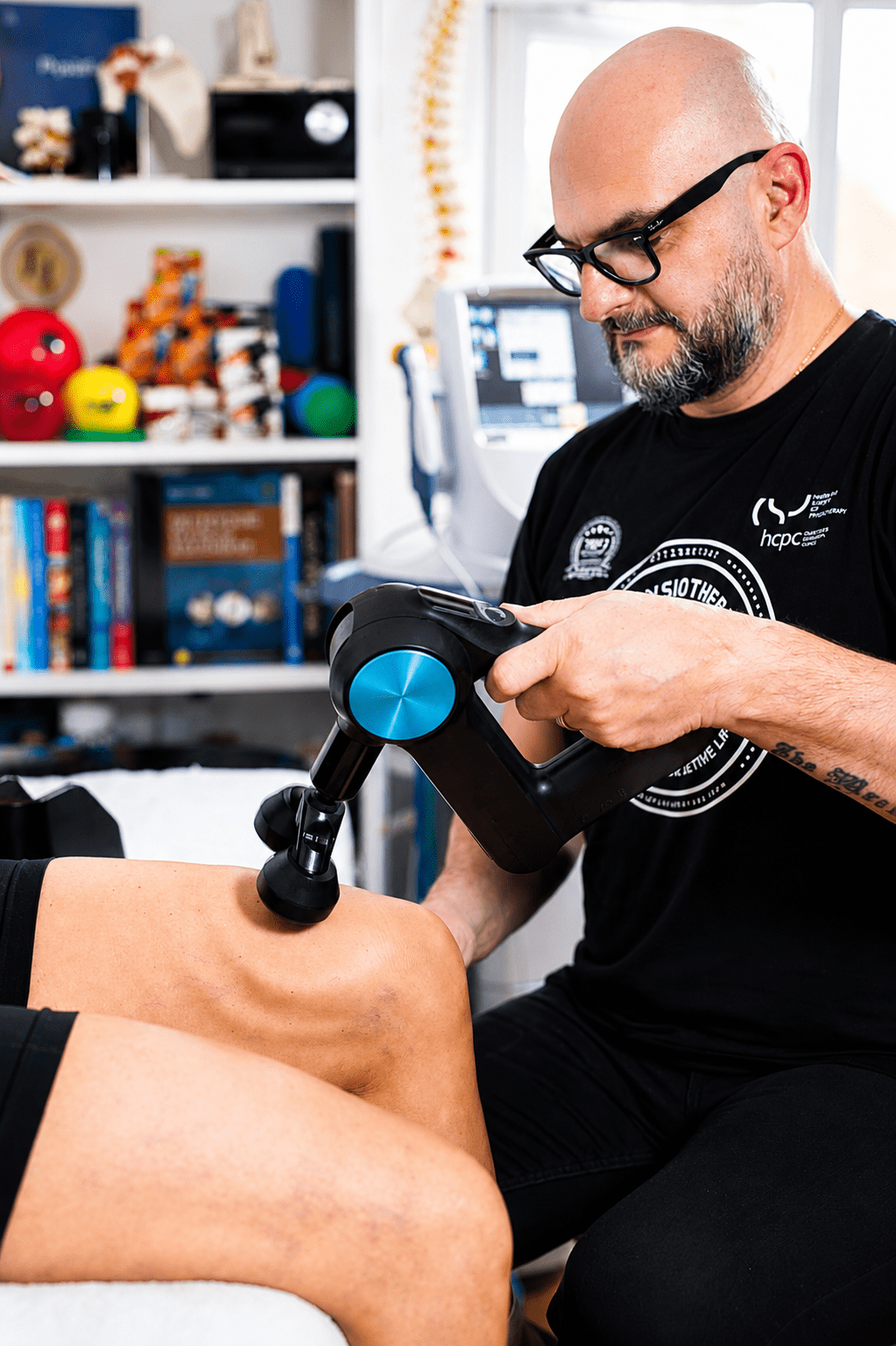
- Percussive Therapy (Massage Gun Therapy)
- Compression Recovery Therapy
- Modern Cupping Therapy
- Laser Therapy
- Patient Education and Advice
Ready to Start Your Recovery?
Book your assessment today and receive a personalised treatment plan tailored to your condition.
Book Online
Medical Evidence and Further Reading
1. NICE
Extracorporeal Shockwave Therapy for Achilles Tendinopathy (HTG426)
https://www.nice.org.uk/guidance/htg426
2. NICE
Extracorporeal Shockwave Therapy for Refractory Plantar Fasciitis (HTG200)
https://www.nice.org.uk/guidance/htg200
3. NICE
Extracorporeal Shockwave Therapy for Calcific Tendinopathy in the Shoulder (HTG645)
https://www.nice.org.uk/guidance/htg645
4. Journal of Orthopaedic & Sports Physical Therapy (JOSPT)
Shockwave Therapy for Midportion and Insertional Achilles Tendinopathy: A Systematic Review With Meta Analysis
https://pubmed.ncbi.nlm.nih.gov/42063301/
5. Frontiers in Immunology
The Effectiveness of Shockwave Therapy on Patellar Tendinopathy, Achilles Tendinopathy and Plantar Fasciitis: A Systematic Review and Meta Analysis
https://pubmed.ncbi.nlm.nih.gov/37662911/
6. British Journal of Sports Medicine
A Systematic Review of Shockwave Therapies in Soft Tissue Conditions
https://bjsm.bmj.com/content/48/21/1538