


Introduction
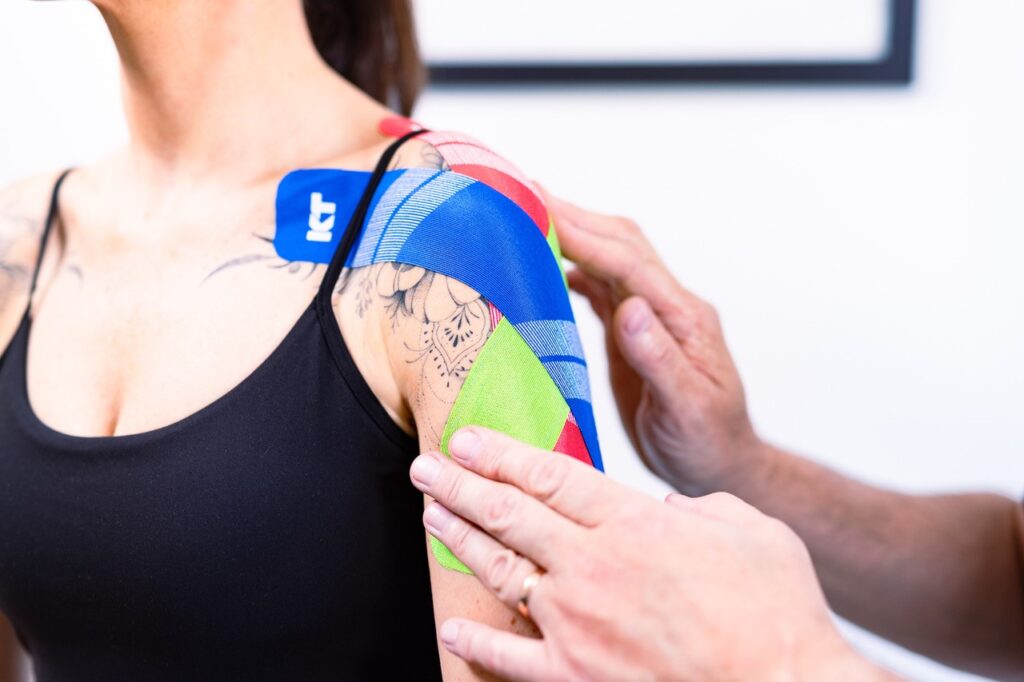
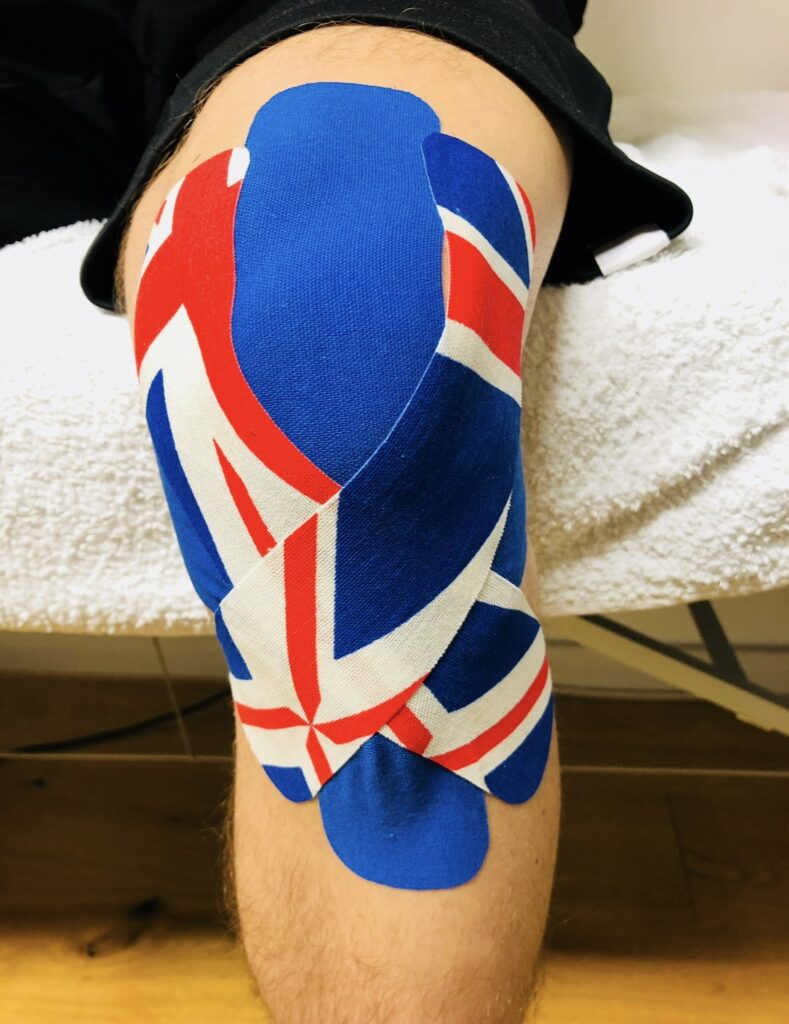
If you have ever watched the Olympic Games, professional football, rugby, athletics or tennis, you have probably noticed colourful strips of tape on athletes’ shoulders, knees, backs and ankles. This is known as Kinesiology Taping. At PK Physiotherapy Northampton one of the questions I hear most often is whether kinesiology tape really works or whether it is simply another trend. The honest answer is that it can be extremely useful for the right patient when it is used correctly and as part of a complete physiotherapy programme.
What is Kinesiology Taping?
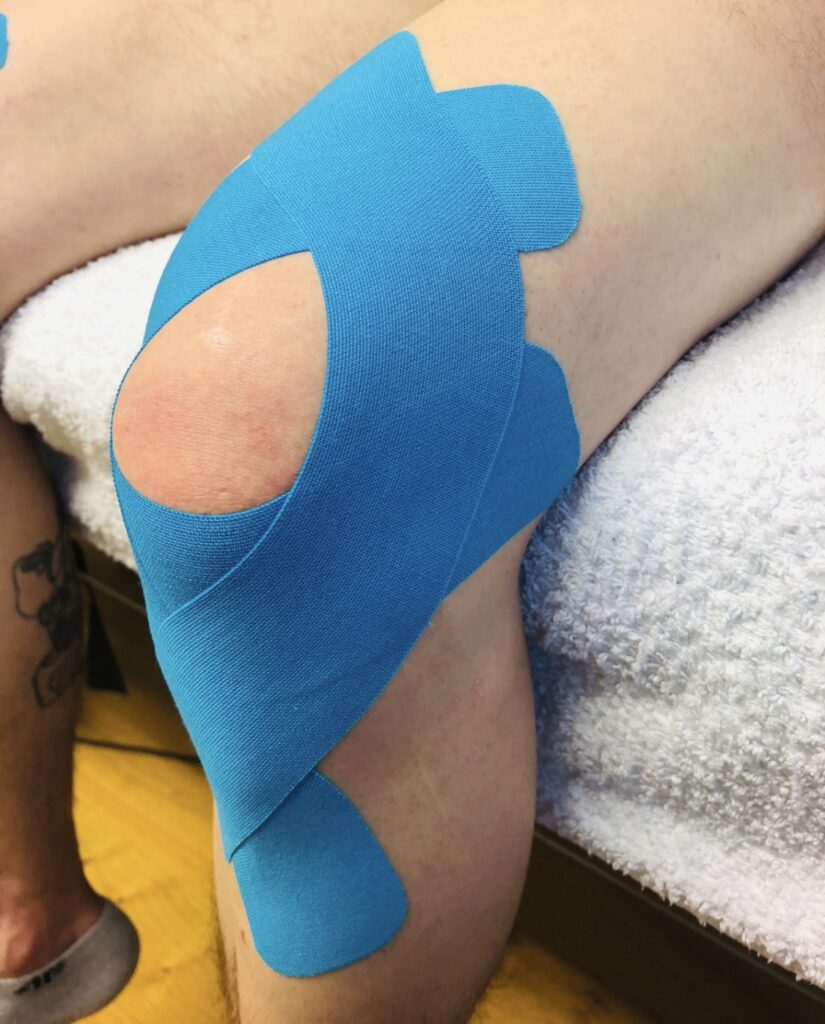
Kinesiology tape is a lightweight elastic therapeutic tape designed to move with the skin. Unlike rigid sports tape, it does not aim to stop movement. Instead, it allows normal movement while providing gentle support to muscles, tendons and joints. It is breathable, water resistant and comfortable enough to wear for several days.
Potential Benefits
Research suggests kinesiology taping may help reduce pain, improve proprioception, increase confidence during movement and provide temporary support during rehabilitation. It should never be considered a replacement for accurate diagnosis, manual therapy or exercise rehabilitation.
How I Use It at PK Physiotherapy
Every patient receives a detailed assessment before any tape is applied. I examine posture, movement, muscle strength, joint mobility and functional activities. Only after identifying the underlying cause of the problem do I decide whether kinesiology taping is appropriate. Sometimes it is an excellent addition to treatment. Sometimes another approach is more suitable.
Conditions That May Benefit
At PK Physiotherapy Northampton, kinesiology taping may be used as part of rehabilitation for shoulder pain, rotator cuff injuries, frozen shoulder, neck pain, back pain, sciatica, tennis elbow, golfer’s elbow, knee pain, runner’s knee, Achilles tendinopathy, plantar fasciitis, ankle sprains and many sports injuries. The decision is always based on clinical assessment rather than routine use.
Why Assessment Is More Important Than Tape
Many people buy kinesiology tape online and attempt to apply it themselves after watching short videos. Unfortunately, the same painful shoulder or knee may have many different underlying causes. Correct diagnosis is far more important than the tape itself. During your assessment I identify the tissues involved, movement faults, strength deficits and factors that contributed to the injury before deciding whether taping is appropriate.
Case Study 1
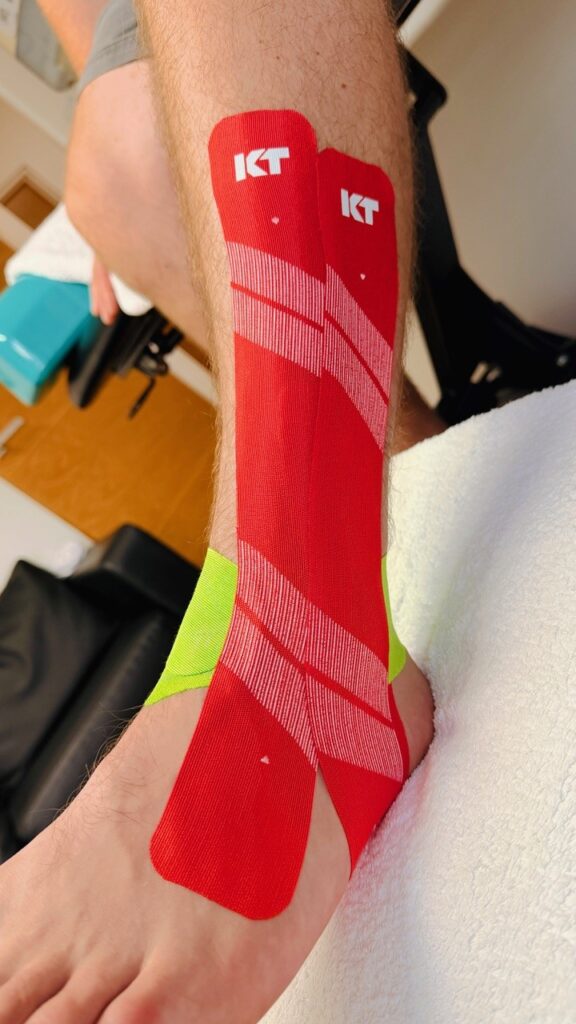
A recreational runner attended PK Physiotherapy with Achilles tendon pain that had been present for several months. Examination identified reduced calf strength, poor ankle mobility and an excessive increase in weekly running distance. Treatment included education, progressive loading exercises, manual therapy and kinesiology taping during the early phase to improve comfort while walking and exercising. Over the following weeks symptoms steadily improved and the patient returned to running.
Case Study 2
An office worker developed persistent shoulder pain after months of working from home. Assessment showed reduced thoracic mobility, weakness of the rotator cuff and poor posture. Kinesiology taping was used alongside manual therapy and a strengthening programme. The tape improved confidence during daily activities but the lasting improvement came from restoring movement and strength.
How Does Kinesiology Taping Work?
Scientists believe kinesiology tape works mainly by stimulating receptors within the skin. This additional sensory input may improve proprioception, helping the brain control muscles and movement more efficiently. Some patients also experience temporary pain relief, allowing them to move with greater confidence while the underlying condition is being treated through physiotherapy. The tape is not repairing damaged tissue. Instead, it may create a more comfortable environment for rehabilitation.
Myths vs Facts
Myth: The tape heals muscles and tendons.
Fact: Healing is performed by your own body. Tape may simply reduce pain and improve movement while recovery takes place.
Myth: Expensive tape works better than cheaper tape.
Fact: Correct assessment and application technique are usually far more important than the brand.
Myth: Only professional athletes benefit.
Fact: Office workers, gardeners, runners, gym users and older adults may all benefit when taping is clinically appropriate.
Common Mistakes
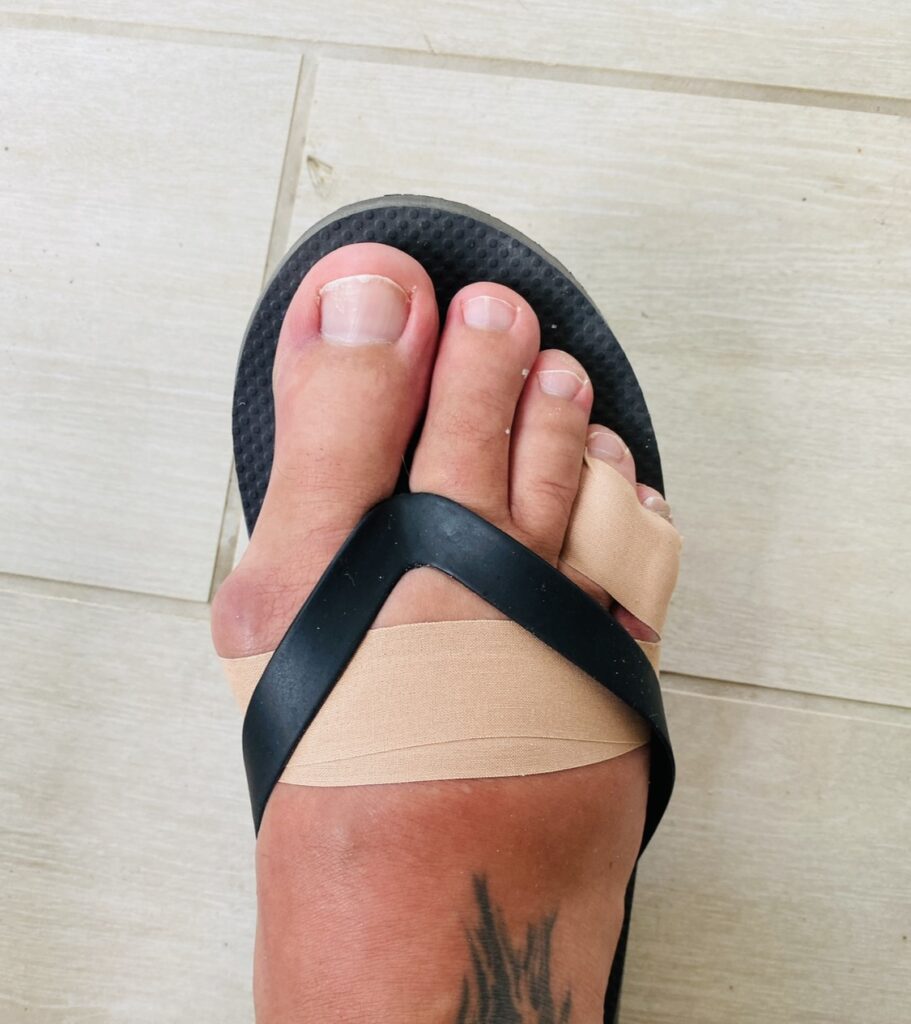
Applying tape over the painful area without understanding the diagnosis, stretching the tape too much, leaving damaged tape on irritated skin and relying on tape instead of completing rehabilitation exercises are among the most common mistakes. At PK Physiotherapy Northampton every patient receives clear instructions on how to care for the tape and when it should be removed.
When Taping May Not Be Appropriate
Kinesiology taping is not suitable for every patient. It may not be appropriate over broken skin, certain skin conditions, active infection or when an allergy to the adhesive is suspected. A full assessment always comes first.
Frequently Asked Questions
Yes. The tape is water resistant and usually remains in place for three to five days.
For the best adhesion, it is recommended to avoid showering, swimming or excessive sweating for the first 6 to 12 hours after the tape has been applied. This allows the adhesive to bond more effectively with the skin, helping the tape stay in place for longer and improving its durability throughout treatment.
Tip: After showering, gently pat the tape dry with a towel rather than rubbing it. Avoid soaking in hot baths or using saunas for prolonged periods, as excessive heat and moisture may reduce the adhesive’s lifespan. If the edges of the tape begin to peel, simply trim the loose ends with scissors rather than pulling the tape off. If you experience itching, skin irritation or an allergic reaction, remove the tape and contact your physiotherapist.
Can I exercise? In most cases yes. The tape is designed to support movement rather than prevent it.
Will I need taping at every appointment? No. It is only used when it adds value to your rehabilitation.
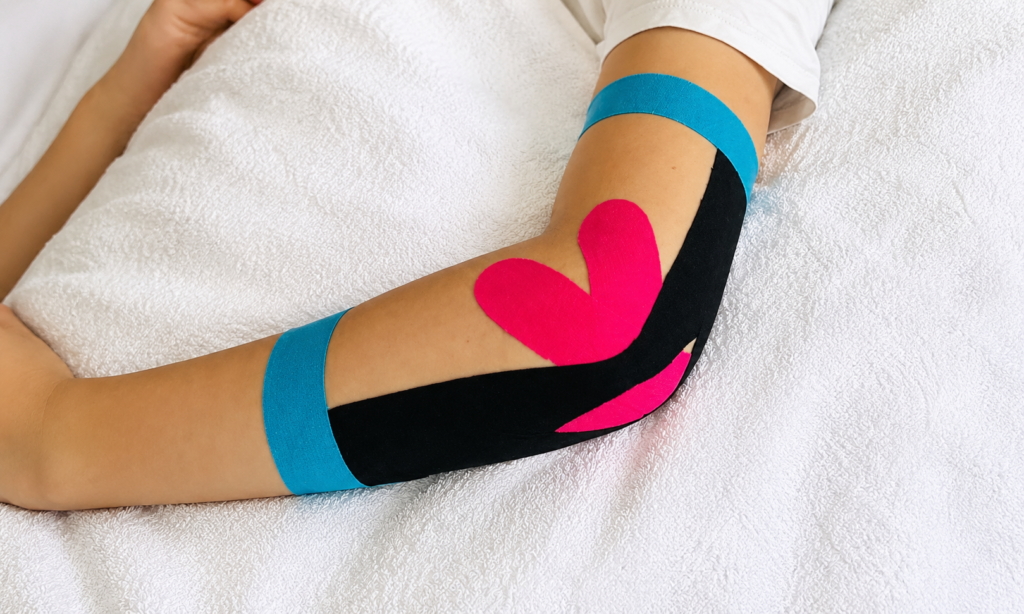
Does the colour matter? No. Blue, black, pink and beige tapes perform the same function.
Can I apply it myself? Some patients can, but the first application should ideally be performed by a physiotherapist after a full assessment.
Another Clinical Example
A patient attended with persistent tennis elbow after several months of DIY work. Examination identified overload of the wrist extensor muscles together with reduced shoulder strength. Treatment included activity modification, manual therapy, progressive strengthening exercises and kinesiology taping during the painful stage. As symptoms settled the tape was discontinued while the exercise programme continued until full recovery.
Why Choose PK Physiotherapy Northampton?
Choosing the right physiotherapist is far more important than choosing a particular treatment technique. At PK Physiotherapy you receive one to one care from a physiotherapist with more than 30 years of clinical experience. Every treatment plan is personalized and based on a detailed assessment rather than a standard protocol. When kinesiology taping is appropriate it is combined with manual therapy, rehabilitation exercises, education and modern evidence-based treatment.
Scientific Evidence
Kinesiology taping has been extensively researched. Current evidence suggests it may provide short term improvements in pain and function for some musculoskeletal conditions, particularly when combined with physiotherapy and exercise. It should not be promoted as a standalone treatment or a cure.
Recommended reading:
PubMed: Effect of kinesiology taping on pain in musculoskeletal injuries
https://pubmed.ncbi.nlm.nih.gov/24875972/
PubMed: Current evidence does not support routine use of Kinesio Taping
https://pubmed.ncbi.nlm.nih.gov/24856938/
PubMed: Overview of 128 systematic reviews on kinesiology taping
https://pubmed.ncbi.nlm.nih.gov/41916769/
Why Evidence Matters
At PK Physiotherapy Northampton every treatment recommendation is based on a combination of clinical experience, the best available scientific evidence and the individual needs of the patient. Kinesiology taping is only recommended when it is likely to provide additional benefit as part of a comprehensive rehabilitation programme.
Book an Assessment
If you are experiencing shoulder pain, neck pain, back pain, sports injuries or any other musculoskeletal problem, book a full assessment at PK Physiotherapy Northampton.
During your appointment you will receive a detailed assessment, an explanation of the cause of your symptoms and a personalised treatment plan. If kinesiology taping is appropriate, it will be incorporated into your rehabilitation alongside evidence-based physiotherapy.
My Clinical Experience
As a physiotherapist with over 30 years of clinical experience, I have treated thousands of patients with muscle, tendon and joint injuries in both the NHS and private practice.
Throughout my career, I have used many different treatment techniques, and one thing has become very clear. There is no single treatment that works for everyone. The best results come from identifying the true cause of the problem and selecting the most appropriate combination of treatments for each individual patient.
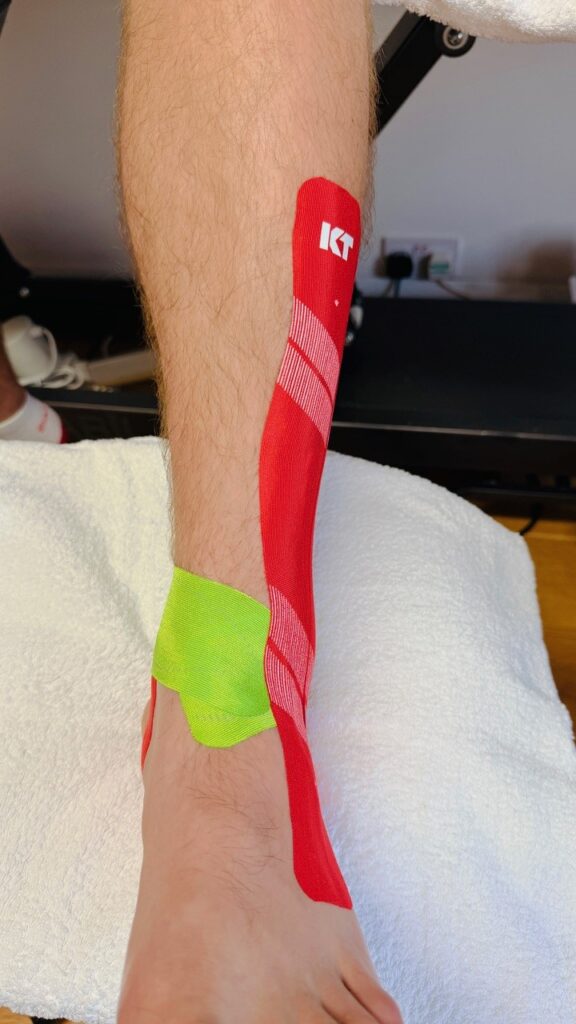
Kinesiology taping is one of the techniques I frequently use, but only when I believe it will genuinely benefit the patient. In my experience, it can be particularly helpful during the early stages of rehabilitation by reducing discomfort, improving confidence during movement and allowing patients to return more comfortably to work, sport or everyday activities.
However, I always explain to my patients that the tape itself does not heal injured tissues. Recovery comes from the body’s natural healing process, supported by an accurate diagnosis, appropriate physiotherapy treatment and a carefully designed rehabilitation programme.
At PK Physiotherapy Northampton, every patient receives a detailed one to one assessment before treatment begins. This allows me to determine whether kinesiology taping is likely to be beneficial or whether another treatment, such as Manual Therapy, Shockwave Therapy, Exercise Rehabilitation or a combination of approaches, would be more appropriate.
After more than three decades in physiotherapy, I have learned that successful rehabilitation is rarely about finding a “miracle treatment”. It is about understanding the patient, identifying the real source of the problem and delivering the right treatment at the right time.
Related Pages
If you found this article helpful, you may also be interested in the following treatments and conditions I regularly manage at PK Physiotherapy Northampton:
Conditions
- Bell’s Palsy
- Neck Pain
- Shoulder Pain
- Rotator Cuff Injuries
- Tennis Elbow
- Back Pain
- Sciatica
- Piriformis Syndrome
- Knee Pain
- Tendinopathy
- Plantar Fasciitis
- Sports Injuries
- Post Surgical Rehabilitation
Treatments
- Manual Therapy
- Shockwave Therapy
- Laser Therapy
- Ultrasound Therapy
- Massage Therapy
- Exercise Rehabilitation
Ready to Start Your Recovery?
Book your assessment today and receive a personalised treatment plan tailored to your condition.
Book Online