




Lower Back Pain Is Common, but It Is Not All the Same
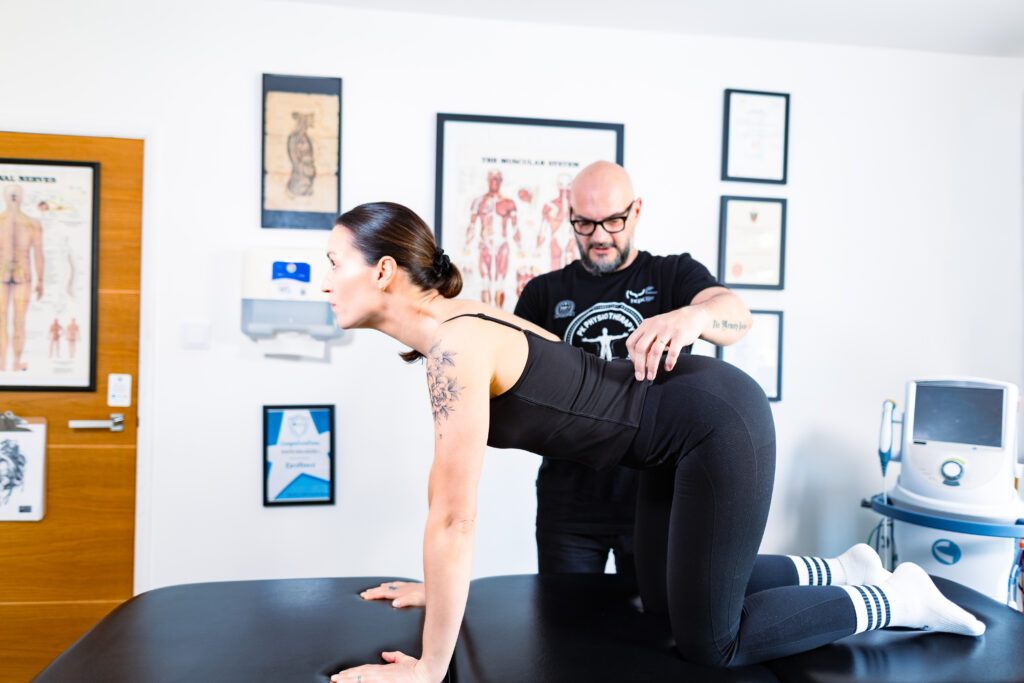
Lower back pain is one of the most common problems I assess in my physiotherapy clinic in Northampton.
Some people arrive after bending to pick something up and suddenly feeling their back lock. Others have been uncomfortable for months, particularly after sitting, driving or working in one position. Some have pain only across the lower back. Others describe pain travelling into the buttock, thigh, knee, calf or foot.
Then there are patients who have already had an MRI and arrive worried by words such as:
disc degeneration
disc dehydration
disc bulge
prolapse
nerve root compression
facet degeneration
The natural reaction is often to assume that something in the spine is damaged and that movement might make it worse.
In many cases, the opposite is true.
Most lower back pain is not caused by serious disease. NICE recommends encouraging people with low back pain, with or without sciatica, to continue normal activities where possible and considers exercise an important part of management. Routine imaging is not recommended simply because someone has back pain. (NICE)
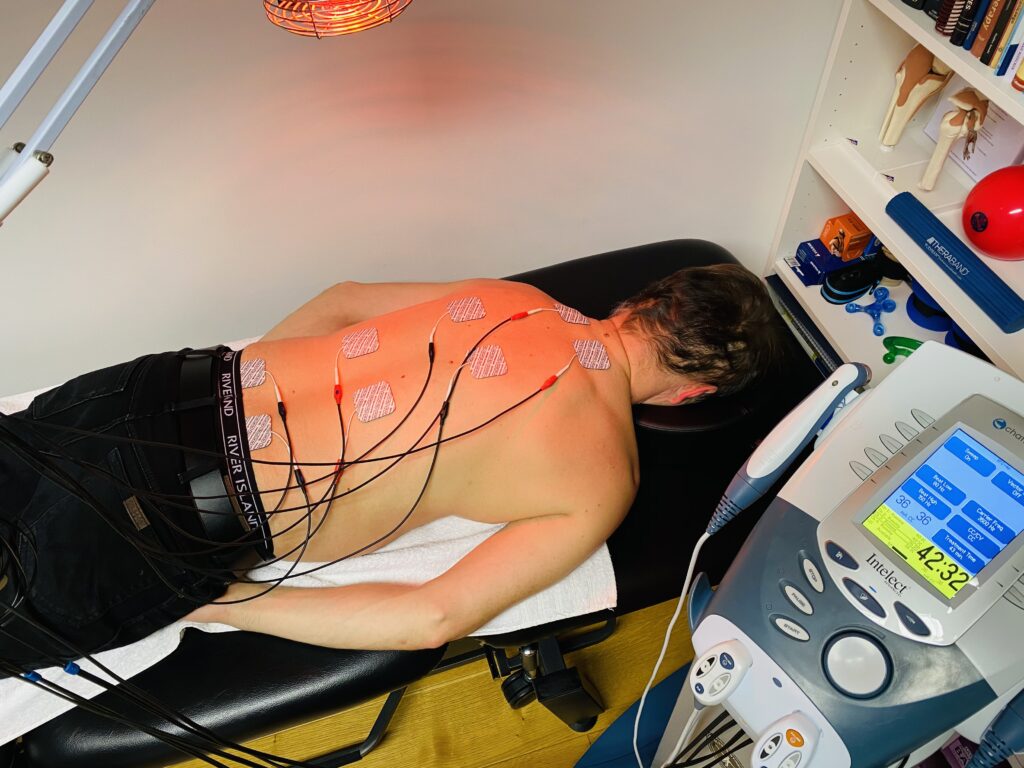
At PK Physiotherapy in Northampton, I begin by working out what type of back problem I am dealing with, whether the nerves are involved, whether there are any warning signs, how the spine moves and, most importantly, how the problem is affecting the individual person.
The purpose of assessment is not simply to give everything the label back pain.
It is to understand why this particular back is hurting.
What Do We Actually Mean by Lower Back Pain?
The lumbar spine consists of five lumbar vertebrae, usually described as L1 to L5, followed by the sacrum.
Between the vertebrae are intervertebral discs. Around them are facet joints, ligaments and layers of muscle. Nerves leave the spinal canal and travel towards the pelvis and legs.
All of these structures work together.
The lower back is not supposed to be rigid.
It is designed to bend, straighten, rotate, absorb force and transfer loads between the upper body, pelvis and legs.
Pain can arise when tissues become irritated, overloaded, injured or temporarily more sensitive. Sometimes one structure is strongly suspected. Very often several factors contribute.
This is one reason why two people can both say:
My lower back hurts
while having completely different clinical presentations.
You can read more about lower back assessment and rehabilitation at PK Physiotherapy Back Pain Northampton. The clinic specifically assesses acute and chronic back pain, sciatica, disc related pain, facet problems, muscle stiffness and other mechanical presentations. (PK Physiotherapy)
The Main Types of Lower Back Pain
1. Non Specific or Mechanical Lower Back Pain
This is the largest group.
The term non specific does not mean that the pain is imaginary or that nobody knows what they are doing.
It means that it is not possible, or clinically necessary, to identify one single anatomical structure as the source of the symptoms.
The pain may involve a combination of:
• muscles
• joints
• discs
• ligaments
• movement sensitivity
• reduced physical conditioning
• prolonged positioning
• sudden changes in physical activity
Typical symptoms include stiffness, aching across the lower back, difficulty bending or straightening and discomfort after prolonged sitting or standing.
An episode can sometimes be extremely painful despite there being no serious damage.
Pain intensity and tissue damage are not the same thing.
2. Muscle Related Back Pain
The lumbar muscles, including the erector spinae and deeper stabilising muscles, work continuously during standing, walking, bending, lifting and controlling the trunk.
They can become painful after unfamiliar loading, repetitive work, heavy lifting or sudden movement.
In acute back pain they may also go into protective spasm.
Patients often describe this as:
My muscles have completely locked up
This protective tension can make the spine feel extremely stiff.
However, it is important not to assume that tight erector spinae muscles are always the original cause.
Sometimes they are reacting to irritation elsewhere.
The muscles can also become less efficient after prolonged periods of inactivity. Reduced trunk endurance, reduced hip strength and avoidance of movement may then make normal daily loads feel increasingly difficult.
The answer is usually not simply to massage the muscles repeatedly.
The longer term aim is to restore movement, strength, endurance and confidence.
3. Disc Related Lower Back Pain
The intervertebral disc has an outer fibrous ring called the annulus fibrosus and a softer central region called the nucleus pulposus.
Discs allow movement between vertebrae while helping to distribute load.
A disc can become a source of symptoms without necessarily compressing a nerve.
Disc related pain may be felt mainly in the lower back and sometimes the buttock or upper leg.
Sitting, bending or repeated flexion may aggravate some disc presentations, although patterns vary considerably between patients.
The important point is that disc pain and sciatica are not automatically the same thing.
A painful disc does not have to be pressing on a nerve.
Disc Bulge, Herniation and Prolapse
These terms often cause unnecessary anxiety.
A disc bulge means that part of the disc extends beyond its usual boundary.
A herniation or prolapse describes more focal displacement of disc material.
Depending on the size, location and direction of the change, it may cause:
• no symptoms at all
• local back pain
• irritation of a lumbar nerve root
• sciatica
• neurological symptoms such as numbness or weakness
MRI findings therefore have to be compared with the clinical examination.
Research has repeatedly shown that disc degeneration and other structural changes can also be found in people without back pain. Imaging abnormalities are more common in people with symptoms, but seeing a disc abnormality does not automatically prove that it is the sole source of the pain. (PubMed)
This is one reason NICE advises against routine imaging for uncomplicated lower back pain. Imaging becomes more useful when the result is likely to change management or when serious pathology or significant neurological involvement is suspected. (NICE)
Disc Dehydration and Degeneration
One of the most misunderstood phrases on an MRI report is:
disc dehydration
A healthy disc contains a large amount of water, particularly within the nucleus pulposus.
As we age, changes occur in the disc matrix and its ability to retain water can reduce. The disc can become less hydrated and sometimes lose some height.
This is commonly described as disc desiccation or dehydration.
It does not simply mean that you have failed to drink enough water.
Drinking adequate fluid is sensible for general health, but drinking another litre of water does not directly rehydrate a degenerative lumbar disc.
Ageing, disc biology, genetics, loading history, smoking and changes in the vertebral endplates can all contribute to degeneration.
Why Movement Still Matters for the Disc
There is an important piece of spinal biology that patients rarely hear about.
A mature intervertebral disc has very little direct blood supply.
The cells in the central disc obtain essential nutrients mainly from nearby blood vessels through diffusion across the vertebral endplates and disc margins. The disc is therefore very different from a muscle, which has a rich blood supply. (PubMed)
Movement and changing spinal load also cause fluid to move in and out of the disc.
During the day, loading gradually reduces disc water content. During periods of unloading, particularly overnight, fluid returns. This is one reason we are slightly taller in the morning than in the evening.
It is sometimes said that movement is the only way nutrients are pumped into the discs.
That is not quite scientifically accurate.
For small nutrients such as glucose and oxygen, diffusion is the main transport mechanism, rather than mechanical pumping. Load related fluid movement does, however, contribute to normal disc fluid exchange and mechanical behaviour. (PubMed)
The practical message for patients remains very important:
The spine is designed to move.
Prolonged unnecessary immobilisation does not make the lumbar spine healthier.
Regular walking, changing position, bending within tolerance and gradually restoring normal activity are usually far more useful than treating the back as a fragile structure that must never move.
Lumbar Nerve Root Irritation
The lumbar nerves leave the spinal canal through openings between the vertebrae.
A nerve root can become irritated by several processes, including:
• disc herniation
• inflammation around a disc
• narrowing of the intervertebral foramen
• degenerative changes
• spinal canal stenosis
Patients commonly call this a trapped nerve.
That description is easy to understand, but it can be misleading.
A nerve does not always have to be physically pinched like an electrical cable.
A lumbar nerve root can become chemically irritated and inflamed, mechanically compressed or affected by a combination of both.
Symptoms can include:
• leg pain
• burning
• tingling
• pins and needles
• numbness
• altered sensation
• weakness
The distribution of symptoms can provide clues about which nerve root may be involved.
For example, L4, L5 and S1 nerve roots produce different patterns of sensation, muscle function and reflex changes.
This is why neurological examination is so important when leg symptoms are present.
Sciatica
Sciatica is not simply another word for lower back pain.
It refers to symptoms caused by irritation or compression of the sciatic nerve or, more commonly, one of the lumbar or sacral nerve roots from which it originates.
Pain may travel from the lower back or buttock into the thigh, calf or foot.
Some people have very little back pain and severe leg pain.
Others experience both.
You can read more about this at PK Physiotherapy Sciatica Northampton. The condition may involve pain, numbness, tingling or weakness and is assessed differently from simple local lower back pain. (PK Physiotherapy)
Leg Pain Does Not Automatically Mean Sciatica
This distinction is important.
Pain in the leg can originate from many structures.
Possible causes include:
• lumbar nerve root irritation
• referred pain from the lumbar spine
• hip pathology
• muscular problems
• tendon problems
• sacroiliac region
• vascular problems
• peripheral nerve problems
• deep gluteal syndrome
The precise location of pain alone is therefore not enough to diagnose sciatica.
A neurological assessment may include sensation, muscle strength, reflexes and nerve provocation tests.
Piriformis Syndrome and Deep Gluteal Pain
Patients frequently arrive saying:
I have sciatica because my piriformis is trapping my sciatic nerve.
Sometimes this is possible.
But it is much less straightforward than social media often suggests.
The piriformis muscle sits deep within the buttock and the sciatic nerve normally travels close to it.
Irritation or compression of the nerve within the deep gluteal region can cause buttock pain and symptoms travelling into the leg.
However, piriformis syndrome remains a somewhat controversial diagnosis because its symptoms can look very similar to nerve irritation originating from the lumbar spine.
For that reason I do not diagnose piriformis syndrome simply because someone has buttock pain and a tight piriformis.
I first want to know:
Is the lumbar spine involved?
Are neurological signs present?
Does spinal movement reproduce the symptoms?
Is there genuine nerve root irritation?
Are symptoms more strongly reproduced by hip and deep gluteal testing?
This differential assessment is essential.
More detail is available at PK Physiotherapy Piriformis Syndrome Northampton. (PK Physiotherapy)
Facet Joint Pain
At the back of each lumbar vertebral segment are small joints known as facet joints.
They guide movement and help transmit load.
These joints can become painful or sensitive, particularly with extension, rotation or prolonged standing in some patients.
Pain is often localised to one side of the lower back and may refer into the buttock or upper thigh.
However, just like disc pain, facet pain cannot always be diagnosed reliably from one movement or one scan finding.
Degenerative facet changes are also common with age.
Clinical context matters.
Spinal Stenosis
Lumbar spinal stenosis describes narrowing within the spinal canal or around the nerve roots.
It is more commonly seen in older adults.
A typical presentation can include discomfort, heaviness, numbness or weakness in one or both legs during walking or prolonged standing.
Some people feel better when sitting or leaning forwards, for example when leaning over a shopping trolley.
This pattern is known as neurogenic claudication.
The management depends on symptom severity, neurological findings and functional limitation.
Some patients can be managed conservatively with physiotherapy and exercise, while others require specialist spinal assessment.
What About Posture?
There is no single perfect posture that prevents back pain.
Sitting upright all day does not guarantee a healthy spine.
Slouching for a short period does not automatically damage a disc.
The bigger issue is often remaining in one position for too long.
I would rather see a patient regularly changing position than desperately trying to maintain a supposedly perfect posture for eight hours.
The best posture is often the next posture.
Your body likes movement and variation.
Why Does My Back Lock Up?
A sudden episode of lower back pain can be dramatic.
Someone bends down, twists or lifts something and suddenly feels unable to straighten.
This does not necessarily mean a disc has slipped out or a vertebra has moved out of place.
Pain can rapidly increase protective muscle activity.
The erector spinae and other lumbar muscles can become highly guarded.
Movement becomes painful.
The person understandably becomes afraid to move.
That fear then produces even more guarding.
This is why early education is important.
The first goal is often to establish that it is safe to begin moving again, gradually and within tolerance.
Red Flags: When Lower Back Pain Needs Medical Investigation
Most back pain is not dangerous.
However, a physiotherapist must always consider whether symptoms might indicate something more serious.
NICE advises clinicians to consider alternative diagnoses including cancer, infection, trauma and inflammatory disease when symptoms or circumstances suggest them. (NICE)
Potential warning features include:
• significant trauma
• unexplained weight loss
• known history of cancer
• fever or systemic illness
• progressive neurological weakness
• severe unremitting pain with concerning systemic features
• suspected fracture
• suspected infection
• symptoms suggesting cauda equina syndrome
A red flag does not automatically mean that serious disease is present.
It means the situation may require further medical assessment.
Cauda Equina Syndrome: The Symptoms You Must Not Ignore
At the bottom of the spinal canal is a bundle of nerve roots called the cauda equina.
These nerves contribute to control of the legs, bladder, bowel and sexual function.
Severe compression of these nerves is uncommon, but it can be a medical emergency.
Symptoms requiring immediate assessment can include new:
• numbness around the genitals, inner thighs or saddle area
• altered sensation when wiping after using the toilet
• difficulty starting urination
• loss of sensation during urination
• inability to feel whether the bladder is full or empty
• new urinary retention or incontinence
• loss of bowel control or altered sensation during bowel movement
• significant changes in sexual sensation or function
• severe or progressive weakness affecting the legs
• sciatica affecting both legs, particularly with other neurological changes
NHS guidance advises patients with suspected cauda equina symptoms to attend an emergency department immediately because delay can increase the risk of permanent neurological damage. (Royal Free London)
Cauda equina syndrome is not something to book a routine physiotherapy appointment for. It requires urgent medical assessment.
Do I Need an MRI?
Usually not at the beginning.
A detailed history and clinical examination frequently provide enough information to start appropriate management.
NICE specifically advises against routine imaging for people with uncomplicated low back pain or sciatica in non specialist settings. Imaging should generally be considered when the result is likely to change management. (NICE)
There is another reason I explain this carefully to patients.
An MRI can find abnormalities that may have been present for years without causing symptoms.
If someone sees the words degeneration, bulge or dehydration without proper explanation, they may begin to believe their back is damaged permanently.
That can create fear of bending, lifting and exercise.
Sometimes the scan provides valuable information.
Sometimes it creates more anxiety than clarity.
The important question is:
Will this scan change what we do?
What Does a Physiotherapy Assessment Involve?
I do not begin by deciding which machine or treatment technique I am going to use.
I begin with assessment.
I want to know:
How did the pain start?
Where exactly is it?
Does it travel into the leg?
Is there numbness or tingling?
Has strength changed?
What happens with sitting, walking, bending or standing?
How is sleep affected?
What does the person do for work?
What activities have they stopped?
What are they worried about?
Have there been previous episodes?
Are there any red flags?
The physical examination may then assess lumbar movement, hip movement, muscle function, neurological status, strength, reflexes, sensation, neural mobility and functional movements.
This determines what happens next.
You can find more information at Initial Physiotherapy Assessment at PK Physiotherapy.
Treatment: What Actually Helps Lower Back Pain?
There is no single treatment for every back.
That is exactly why rehabilitation needs to be individual.
Keep Moving
For most uncomplicated lower back pain, prolonged bed rest is not the answer.
NICE recommends advice to continue normal activity and supports exercise programmes selected according to the person’s needs, preferences and capabilities. (NICE)
That might begin with something as simple as walking.
For another person it may include lumbar mobility, hip mobility and basic trunk exercises.
Someone returning to construction work will eventually need considerably more loading than someone whose main goal is walking comfortably.
Exercise Rehabilitation
Exercise may target:
• spinal mobility
• trunk strength and endurance
• erector spinae capacity
• abdominal and deep trunk control
• gluteal strength
• hip mobility
• balance and coordination
• lifting technique
• cardiovascular fitness
• gradual exposure to feared movements
The important word is progressive.
If someone has been avoiding bending for six months, I do not expect them to immediately perform heavy deadlifts.
Equally, I do not want them to spend the rest of their life frightened of bending.
The aim is to rebuild capacity.
You can read more about individual rehabilitation at Specific Personalised Exercise Programmes at PK Physiotherapy.
Manual Therapy
Mobilisation, manipulation and soft tissue techniques may sometimes help reduce pain or improve movement.
However, I do not regard manual therapy as the entire treatment.
NICE recommends considering manual therapy only as part of a wider package that includes exercise, with or without psychological approaches where appropriate. (NICE)
That is an important distinction.
If hands on treatment helps someone move more comfortably, good.
But the next question is:
What are we going to do with that improved movement?
More information is available at Joint Mobilisation and Manipulation at PK Physiotherapy.
The Psychological Side of Back Pain Does Not Mean the Pain Is Psychological
Persistent pain changes behaviour.
Patients may stop bending.
They may stop exercising.
They may avoid lifting.
They may become frightened that every painful movement is creating more damage.
Some start checking every movement before they make it.
This can gradually reduce physical capacity and confidence.
Recognising fear, stress or poor sleep as contributors does not mean telling someone the pain is in their head.
Pain is real.
The purpose is to identify everything that may be keeping the problem going.
For persistent low back pain, NICE supports combined physical and psychological approaches when significant obstacles to recovery are present. (NICE)
My Clinical Perspective After More Than 30 Years in Physiotherapy
Lower back pain is a perfect example of why treating a patient is different from treating an MRI report.
I have seen people with dramatic MRI findings who function remarkably well.
I have also assessed patients with severe pain whose imaging shows relatively modest age related changes.
So I never start with:
How bad does the scan look?
I start with:
What can this person do?
Can they walk?
Can they bend?
Can they sit?
Can they lift?
Is there leg pain?
Is there weakness?
Is the nervous system involved?
What are they afraid to do?
What do they need to return to?
A delivery driver, builder, nurse, office worker, marathon runner and retired person may all present with lower back pain, but their rehabilitation cannot be identical.
After more than three decades in physiotherapy, one principle has become increasingly important to me.
The spine needs confidence as much as it needs strength.
The patient needs to understand that the back is not a fragile stack of bones that can easily slip out of place.
It is a strong, adaptable structure.
Sometimes it becomes irritated.
Sometimes a nerve becomes involved.
Sometimes a disc contributes.
Sometimes muscles protect too aggressively.
And occasionally there are warning signs that require medical investigation.
My job is to recognise the difference.
Questions Patients Frequently Ask Me
Is a slipped disc really a disc that has slipped out of place?
No.
The expression slipped disc is misleading.
The disc does not slide out from between the vertebrae. Usually the term refers to disc bulging or herniation in which part of the disc extends beyond its normal boundary.
Can a disc go back in?
Disc herniations can change over time and symptoms may improve considerably. Clinical recovery does not require an MRI to become completely normal.
My MRI says degenerative disc disease. Does that mean my spine is diseased?
Not in the way many patients interpret the word disease.
Degenerative changes become increasingly common with age and may be present without pain. They need to be interpreted in the context of symptoms and examination. (PubMed)
Is disc dehydration caused by not drinking enough water?
Usually no.
Disc dehydration on MRI generally refers to changes in the disc’s ability to retain water, often associated with ageing and degeneration.
Normal hydration is good for general health, but it is not a direct cure for disc degeneration.
Should I avoid bending forward?
Not automatically.
Some acute conditions may temporarily respond better to modifying particular movements, but permanently avoiding spinal flexion is rarely a sensible long term strategy.
The goal is normally gradual restoration of useful movement.
Should I strengthen my core?
Often strengthening is useful, but the spine does not depend on one magic core exercise.
Trunk endurance, hips, legs, cardiovascular fitness and confidence with movement may all matter.
Is walking good for lower back pain?
For many patients, yes.
Walking provides regular movement with relatively manageable spinal loading and can be an excellent starting point.
The appropriate amount depends on symptoms.
Why does my back feel worse after sitting?
Prolonged sitting means prolonged exposure to one position.
Some disc related and mechanical presentations are particularly sensitive to sustained flexion.
Regular movement breaks can help.
My pain travels into my leg. Is that definitely a trapped nerve?
No.
Leg pain can be neurological, referred from the lumbar spine or arise from structures outside the spine.
A clinical assessment is required.
Is piriformis syndrome the same as sciatica?
No.
Sciatica usually describes symptoms arising from irritation of the sciatic nerve or its nerve roots.
Piriformis syndrome or deep gluteal syndrome refers to possible irritation around the nerve within the buttock region.
The symptoms can overlap considerably. (PK Physiotherapy)
Should I have an MRI before starting physiotherapy?
Usually not.
NICE does not recommend routine imaging for uncomplicated low back pain or sciatica. (NICE)
Should I rest until the pain completely disappears?
Usually no.
Temporary modification may be necessary during a severe episode, but prolonged inactivity can reduce strength, endurance and confidence.
Gradual return to normal activity is usually more helpful. (NICE)
When is surgery considered for sciatica?
Most patients do not immediately require surgery.
NICE recommends considering spinal decompression when non surgical treatment has failed to improve pain or function and imaging findings are consistent with the sciatic symptoms. (NICE)
When should I go directly to A&E?
New bladder or bowel dysfunction, saddle numbness, major progressive neurological weakness or other symptoms suggestive of cauda equina syndrome require emergency assessment. (Royal Free London)
The Most Important Message
Lower back pain can be frightening because pain often makes people believe their spine is being damaged every time they move.
In the majority of uncomplicated cases, that is not what is happening.
A painful back often needs appropriate movement rather than fear of movement.
A weak or deconditioned back needs progressive loading.
An irritated nerve needs proper neurological assessment and management.
A significant disc problem needs its symptoms interpreted alongside examination and, when appropriate, imaging.
And a patient with genuine red flags needs rapid medical investigation rather than another exercise.
The skill lies in recognising which situation is in front of us.
Book a Lower Back Pain Assessment in Northampton
If lower back pain is affecting your work, sleep, walking, driving, sport or everyday activities, or you are experiencing pain travelling into the buttock or leg, a detailed physiotherapy assessment can help establish the most appropriate next step.
At PK Physiotherapy Northampton, every patient is assessed and treated personally, with treatment based on clinical findings, function and individual goals. The clinic provides specialist physiotherapy for back pain, sciatica and other musculoskeletal conditions. (PK Physiotherapy)
Book an Initial Physiotherapy Assessment and start with the most important part of treatment: understanding what is actually causing your symptoms.
Useful PK Physiotherapy Links
Piriformis Syndrome Northampton
Initial Physiotherapy Assessment
Specific Personalised Exercise Programmes
Joint Mobilisation and Manipulation
Medical Evidence and Further Reading
NICE Guideline NG59: Low Back Pain and Sciatica in Over 16s
This is the key UK guideline covering assessment, self management, exercise, manual therapy, imaging, medication, injections and surgical referral. NICE recommends continued normal activity, supports exercise and advises against routine imaging in uncomplicated low back pain. (NICE)
Intervertebral Disc Nutrition
Research into disc biology confirms that the central intervertebral disc is largely avascular. Nutrients such as oxygen and glucose reach disc cells predominantly by diffusion from vessels around the disc and through the endplate region. (PubMed)
Intervertebral Disk Nutrition Review on PubMed
Disc Degeneration and MRI Findings
MRI abnormalities must be interpreted carefully because degenerative findings are not synonymous with symptoms. Structural findings are more common in symptomatic patients but can also exist without pain. (PubMed)
Systematic Review and Meta Analysis on PubMed
Cauda Equina Syndrome
New changes involving bladder, bowel or saddle sensation can represent cauda equina syndrome and require urgent assessment. (Royal Free London)
Royal Free London NHS Cauda Equina Patient Information
Library
National Institute for Health and Care Excellence. Low Back Pain and Sciatica in Over 16s: Assessment and Management. NG59.
NICE NG59
Urban JPG, Roberts S. Degeneration of the intervertebral disc. Nutrient supply and disc metabolism.
Evidence explaining the dependence of disc cells on nutrient diffusion from surrounding vascular structures. (PubMed)
Urban JPG. Intervertebral disk nutrition: a review of factors influencing concentrations of nutrients and metabolites.
Review of the pathways by which nutrients reach the largely avascular intervertebral disc. (PubMed)
Urban JPG, Smith S, Fairbank JCT. Nutrition of the intervertebral disc.
Describes diffusion as the primary mechanism by which small nutrients reach disc cells. (PubMed)
Urban J, Holm S, Maroudas A, Nachemson A. Nutrition of the intervertebral disc: effect of fluid flow on solute transport.
Demonstrates why disc nutrition should not be simplified to the idea that movement mechanically pumps all nutrients into the disc. (PubMed)
Brinjikji W et al. MRI Findings of Disc Degeneration are More Prevalent in Adults with Low Back Pain than in Asymptomatic Controls.
Systematic review and meta analysis examining the relationship between lumbar imaging findings and symptoms. (PubMed)
Royal Free London NHS Foundation Trust. Cauda Equina Syndrome.
Current NHS patient guidance explaining emergency symptoms relating to bladder, bowel, saddle sensation and sexual function. (Royal Free London)