




Introduction
Electrotherapy has been used in physiotherapy for decades, yet it remains one of the most misunderstood treatments. Some people believe it is outdated, while others describe it as one of the most effective methods for reducing pain. The truth lies somewhere in between. Electrotherapy is not a miracle cure, but when combined with a thorough assessment, manual therapy and a personalised rehabilitation programme, it can play an important role in helping patients recover.
What Is Electrotherapy?
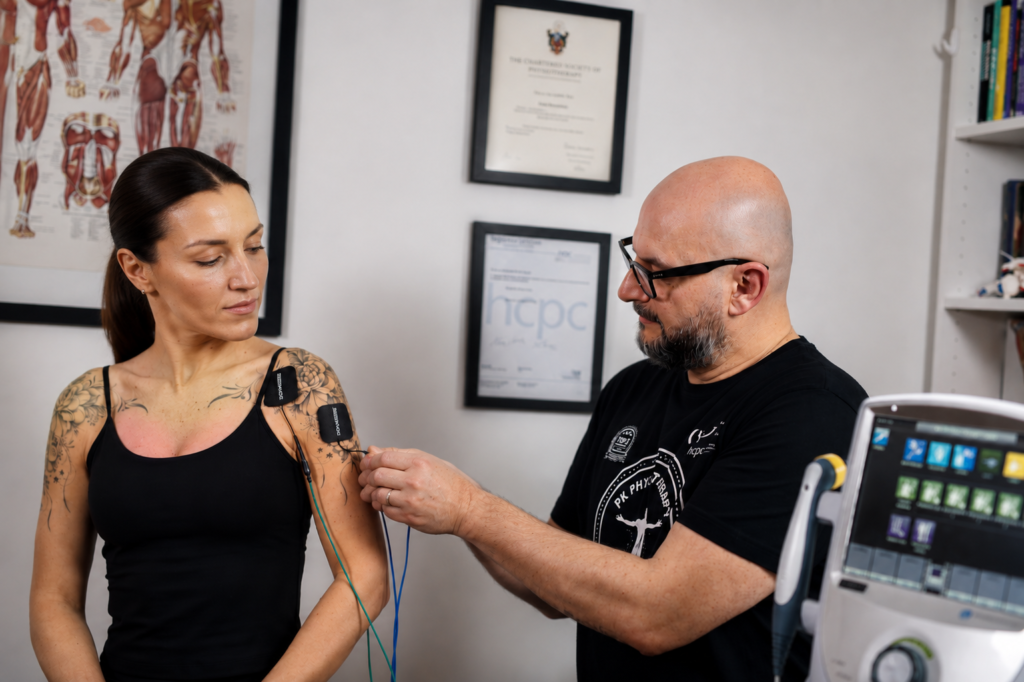
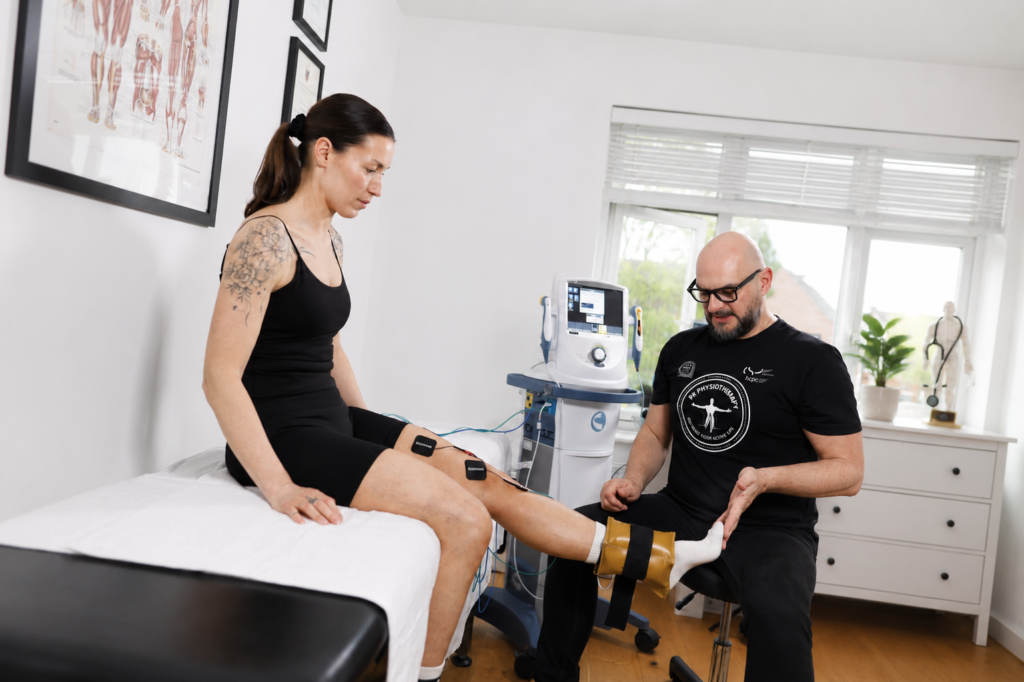
Electrotherapy uses carefully controlled electrical currents to reduce pain, stimulate muscles and support rehabilitation. At PK Physiotherapy I use the Chattanooga Advanced Intelect system, allowing treatment to be tailored to each patient’s needs. The two techniques used most frequently are Interferential Current Therapy (IFC) and Transcutaneous Electrical Nerve Stimulation (TENS). Although both deliver electrical stimulation, they have different clinical applications.
My Perspective
After more than 30 years of clinical practice, electrotherapy remains one of the treatment methods I use almost every day. In my experience, when it is applied to the right patient, at the right stage of recovery and combined with manual therapy and exercise, around 95% of my patients report noticeable pain relief or improved comfort during rehabilitation. I never rely on electrotherapy alone, but it is often an excellent tool that helps patients move more comfortably and participate more effectively in their exercise programme.
How Does Electrotherapy Work?
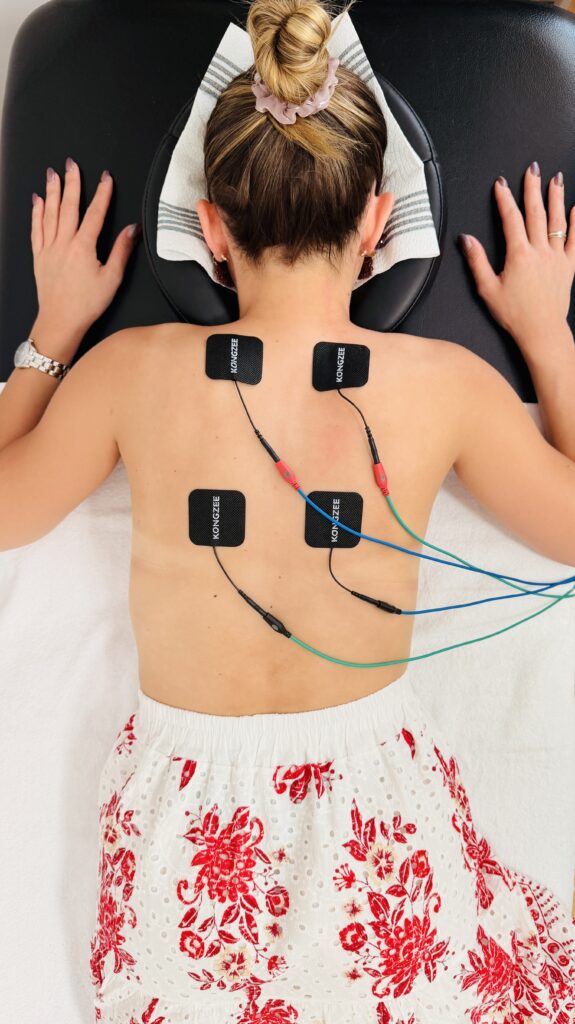
Electrotherapy works by delivering carefully controlled electrical impulses through the skin. Depending on the treatment settings, these impulses can reduce pain, stimulate muscles, improve circulation and support rehabilitation. The treatment itself does not repair damaged tissues directly. Instead, it helps create better conditions for recovery by making movement and exercise more comfortable.
IFC vs TENS – What’s the Difference?
Interferential Current Therapy (IFC) uses two medium-frequency currents that intersect within the tissues, allowing treatment of deeper structures with greater comfort. TENS usually delivers lower-frequency stimulation and is primarily used for pain relief by influencing the way pain signals are processed by the nervous system. At PK Physiotherapy, the choice between IFC and TENS depends on your diagnosis, symptoms and treatment goals rather than personal preference.
How Can Electrotherapy Reduce Pain?
One of the best known explanations is the Pain Gate Theory. Electrical stimulation activates sensory nerves that can reduce the transmission of pain signals travelling to the brain. Electrotherapy may also encourage the release of endorphins, the body’s natural pain-relieving chemicals. For some patients this creates a temporary ‘window of opportunity’ where pain is reduced enough to perform important rehabilitation exercises.
Conditions Commonly Treated
- Back Pain and Sciatica
- Neck Pain
- Shoulder Pain
- Muscle Strains
- Ligament Injuries
- Sports Injuries
- Knee Pain
- Post Surgical Rehabilitation
Evidence Based Practice
Current research suggests that electrotherapy should not replace active rehabilitation. Instead, it is most effective when used alongside education, manual therapy and exercise. The strength of evidence varies depending on the condition being treated, which is why treatment should always be based on an individual assessment rather than a standard protocol.
What Does the Scientific Evidence Say?
The evidence for electrotherapy is mixed and depends on the condition being treated. Current clinical research suggests that IFC and TENS are most useful as part of a comprehensive physiotherapy programme rather than as stand-alone treatments. Patients who combine pain relief with progressive exercise, education and activity modification generally achieve better long-term outcomes than those relying on electrotherapy alone.
NICE and Evidence Based Practice
Current NICE guidance for common musculoskeletal conditions focuses on exercise, education and self-management as the foundation of treatment. Electrotherapy is not recommended as a replacement for active rehabilitation. However, it may be used by clinicians when it helps patients reduce pain and engage more effectively with movement and exercise.
What Do Systematic Reviews Show?
Published systematic reviews report that TENS can provide short-term pain relief for selected musculoskeletal conditions, while the evidence for interferential current therapy is generally moderate and varies between diagnoses. Researchers consistently conclude that electrotherapy should complement, rather than replace, evidence-based physiotherapy.
Case Study 1 – Acute Low Back Pain
A 42-year-old warehouse worker attended PK Physiotherapy with acute low back pain after lifting heavy boxes at work. Pain made walking, sitting and changing position difficult. Treatment combined interferential current therapy, manual therapy, education and a progressive exercise programme. Pain reduced sufficiently during the first week to allow normal movement patterns to return, enabling the patient to participate fully in rehabilitation. Within four weeks he had returned to unrestricted work without significant symptoms.
Key Clinical Message
Electrotherapy should be viewed as a tool rather than a cure. In my clinical practice it is often valuable because reducing pain early allows patients to move with greater confidence, regain function sooner and participate more effectively in rehabilitation.
Case Study 2 – Neck Pain Following a Road Traffic Accident
A 38-year-old office worker attended PK Physiotherapy six weeks after a minor road traffic accident. She complained of persistent neck pain, muscle spasm and headaches, making it difficult to work at a computer for more than 30 minutes. Assessment identified reduced cervical mobility and significant muscle guarding rather than serious structural injury.
Treatment combined interferential current therapy, manual therapy, postural advice and a progressive exercise programme. Electrotherapy helped reduce muscle tension and pain, allowing manual therapy and exercises to be performed more comfortably. After five treatment sessions she reported substantial improvement in pain, increased neck movement and was able to return to full-time office work without significant symptoms.
Is Electrotherapy Safe?
Electrotherapy has been used safely in physiotherapy for many years. Most patients experience nothing more than a gentle tingling sensation. Serious side effects are extremely uncommon when treatment is provided by a qualified physiotherapist following a full clinical assessment.
When Should Electrotherapy Not Be Used?
Electrotherapy may not be appropriate for everyone. Treatment is generally avoided over implanted cardiac pacemakers or other electronic devices, areas of active infection, suspected malignant tumours, impaired skin sensation, or where electrical stimulation may be unsafe. Every patient should be individually assessed before treatment begins.
Pregnancy
Pregnancy is not always an absolute contraindication to every form of electrotherapy. TENS is sometimes used during pregnancy and labour for pain relief. However, treatment must be individually assessed and electrode placement is important.
Electrical stimulation should generally not be applied over the abdomen, pelvis or lower back during pregnancy unless it is specifically recommended and supervised by a clinician experienced in antenatal care. Extra caution is required where there is a history of miscarriage, uterine irritability, epilepsy or complications in the current pregnancy.
At PK Physiotherapy, pregnant patients should always inform the physiotherapist before treatment. Electrotherapy will only be considered after an individual assessment and will not be used where there is any concern about safety.
Common Myths About Electrotherapy
- Electrotherapy cures every painful condition.
- You only need one treatment session.
- Electrical stimulation replaces exercise.
- If you cannot feel a strong sensation, the treatment is not working.
Practical Advice
Electrotherapy works best when it is used to support an active rehabilitation programme. Patients who continue their prescribed exercises, stay physically active within comfortable limits and follow professional advice are far more likely to achieve lasting improvement than those relying on passive treatment alone.
Frequently Asked Questions
Does electrotherapy hurt?
Most patients feel only a gentle tingling sensation. Treatment should never be painful.
How many sessions will I need?
This depends on your condition. Electrotherapy is usually combined with other physiotherapy treatments over several appointments.
Can I drive after treatment?
Yes. Patients can normally return to their usual daily activities immediately afterwards.
Is electrotherapy suitable for everyone?
No. It is not appropriate for some people, which is why a full assessment is always performed before treatment.
Can I Have Electrotherapy During Pregnancy?
Some forms of TENS may be used during pregnancy, but electrotherapy is not automatically suitable for every pregnant patient. Treatment depends on the stage of pregnancy, medical history, symptoms and electrode placement. Electrical stimulation is generally avoided over the abdomen, pelvis and lower back unless specifically advised by an appropriately qualified clinician.
Will electrotherapy cure my problem?
No single treatment guarantees recovery. Electrotherapy is most effective when combined with manual therapy, education and a personalised exercise programme.
Conclusion
Electrotherapy remains a valuable tool in modern physiotherapy when used for the right patient, at the right time and for the right condition. It should never replace active rehabilitation, but it can reduce pain, improve comfort and help patients participate more effectively in exercise-based recovery.
Book Your Assessment
If you would like to know whether electrotherapy could help your condition, book a full assessment at PK Physiotherapy Northampton. Following a detailed examination, we will explain your diagnosis and recommend the treatment approach most appropriate for your recovery.
Medical Evidence and Further Reading
- NICE – Low back pain and sciatica in over 16s (NG59)
- Cochrane Library – Transcutaneous Electrical Nerve Stimulation (TENS) reviews
- Journal of Orthopaedic & Sports Physical Therapy (JOSPT)
- PubMed – Systematic Reviews on TENS and Interferential Current Therapy
- International Association for the Study of Pain (IASP)
Useful Internal Links
Related Treatments
- Massage Therapy
- Manual Therapy
- Exercise Therapy
- Shockwave Therapy
- Kinesiology Taping
- Therapeutic Ultrasound
- Laser Therapy