


Introduction
An ACL injury can sound frightening, particularly when an MRI report contains words such as partial tear, high grade tear or complete rupture.
One of the first questions patients usually ask is:
Will I need surgery?
The answer is not determined simply by the grade of the ACL injury.
Some people with partial ACL injuries can return to normal life, work and sport following a structured rehabilitation programme. Importantly, selected patients with a complete ACL rupture can also achieve good function without reconstruction.
For others, persistent instability, repeated episodes of giving way, associated meniscal or cartilage injuries, sporting requirements or occupational demands may make an orthopaedic opinion and potentially ACL reconstruction appropriate.
The important question is therefore not simply How badly is my ACL torn?
The better question is How stable and functional is my knee, and what do I need it to do?
In this article, I explain the different grades of ACL injury, how they are assessed, when physiotherapy may be enough, when surgery should be considered and what rehabilitation involves before and after ACL reconstruction.
What Is the ACL?
The anterior cruciate ligament, usually known as the ACL, is one of the major stabilising ligaments inside the knee.
It connects the femur to the tibia and contributes to controlling forward movement of the tibia and rotational stability of the knee.
The ACL becomes particularly important during acceleration, deceleration, landing, twisting and changing direction.
This explains why ACL injuries are commonly associated with football, rugby, basketball, netball, skiing, tennis, martial arts and other activities involving jumping, landing, cutting or pivoting.
However, you do not need to be an athlete to injure your ACL.
An ACL injury can also occur during a fall, road traffic accident, workplace accident or unexpected twisting movement.
Many ACL injuries occur without direct contact. The foot may remain planted while the body rotates or suddenly changes direction.
What Does an ACL Injury Feel Like?
Symptoms vary considerably between patients.
Some people describe hearing or feeling a distinct pop inside the knee at the moment of injury. Others experience sudden pain or the sensation that something moved incorrectly inside the knee.
Common symptoms can include:
• sudden knee pain
• rapid swelling
• difficulty continuing the activity
• reduced knee movement
• difficulty fully straightening the knee
• difficulty walking initially
• a feeling that the knee is unstable
• episodes of giving way
• loss of confidence during twisting or changing direction
These symptoms may suggest an ACL injury, but they cannot reliably tell us how severely the ligament has been damaged.
If knee pain or instability persists following an injury, a detailed assessment can help identify the likely structures involved and determine the appropriate rehabilitation pathway. You can read more about assessment and treatment of knee problems on the PK Physiotherapy Knee Pain page.
Grades of ACL Injury
Grade 1: ACL Sprain
A Grade 1 injury is generally a mild ACL sprain. The ligament has been injured or stretched, but its overall structural integrity remains preserved.
There may be pain, swelling and temporary loss of movement, but the knee usually retains reasonable stability.
Most isolated Grade 1 ACL injuries do not require surgery.
Treatment normally focuses on restoring full knee movement, reducing symptoms, rebuilding lower limb strength and gradually restoring balance, proprioception and confidence.
Grade 2: Partial ACL Tear
A Grade 2 injury represents a partial tear of the ACL.
Some ligament fibres have been disrupted while others remain intact.
This is where treatment becomes much more individual.
A partial tear seen on MRI does not automatically mean that the knee is functionally unstable. Some patients maintain good stability and progress extremely well with structured rehabilitation.
Others continue to experience instability, particularly during rotation, pivoting or rapid changes of direction.
The treatment decision therefore depends not only on the structural appearance of the ligament but also on how the knee performs.
Grade 3: Complete ACL Rupture
Grade 3 represents complete rupture of the ACL.
A completely ruptured ACL can no longer provide its normal contribution to knee stability. However, this does not automatically mean that every patient requires reconstruction.
Some patients can regain sufficient functional stability for their work, everyday life and selected physical activities through structured rehabilitation.
Others continue to experience instability despite good strength and neuromuscular control. In these circumstances, particularly when the patient wants to return to demanding pivoting activities or has associated knee injuries, surgical reconstruction may become appropriate.
Can I Tell What Grade My ACL Injury Is?
No. You cannot reliably determine the grade of an ACL injury yourself.
Assessment should be performed by an appropriately qualified healthcare professional such as a physiotherapist, doctor or orthopaedic specialist.
The assessment may include the mechanism of injury, swelling, range of movement, functional symptoms, episodes of giving way and clinical stability testing.
Tests commonly used when assessing the ACL include the Lachman test, anterior drawer test and pivot shift test.
MRI may be used to confirm the diagnosis and assess associated injuries involving structures such as the meniscus, cartilage or other knee ligaments.
Importantly, pain does not reliably indicate the grade of ACL damage.
A complete ACL rupture can sometimes become surprisingly comfortable once the initial inflammatory stage settles. Conversely, a partial injury can remain painful.
Similarly, being able to walk does not prove that the ACL is intact.
A pop, rapid swelling and subsequent instability can increase suspicion of an ACL injury, but these symptoms alone cannot distinguish Grade 1, Grade 2 and Grade 3 injuries.
Why Functional Stability Matters
MRI provides valuable structural information, but the scan is only one part of the clinical picture.
Two patients can have similar MRI findings and completely different functional presentations.
One patient with an ACL rupture may regain good strength and control and experience no instability during normal activities.
Another may experience repeated giving way when turning quickly, descending stairs, walking on uneven ground or attempting sport.
This is why treatment decisions should combine imaging findings with clinical assessment, functional stability, associated injuries and the patient’s goals.
We treat the patient and their functional problem, not simply the MRI report.
When Is Physiotherapy Enough and When Should Surgery Be Considered?
This is where ACL management needs to be individualised rather than reduced to a simple grading system.
There is no responsible clinical rule stating:
Grade 1 equals exercises
Grade 2 equals intensive physiotherapy
Grade 3 equals surgery
Grade 1 injuries are generally managed conservatively.
Many Grade 2 injuries can also be successfully managed through structured rehabilitation when sufficient functional stability remains.
Selected patients with complete ACL rupture can also achieve satisfactory function without reconstruction.
A rehabilitation first approach may be appropriate when there is good functional stability, no recurrent giving way, progressive recovery of strength and neuromuscular control, achievable activity goals and no associated injury requiring surgical management.
The KANON randomised trial followed young active adults with acute ACL tears and compared early reconstruction with structured rehabilitation and the option of later reconstruction. At five years, there was no significant difference in the main patient reported outcomes between the strategies. Approximately half of the patients allocated to rehabilitation with optional delayed reconstruction had not undergone reconstruction at five years.
The COMPARE randomised trial also demonstrated that 50% of patients initially allocated to rehabilitation with optional delayed reconstruction did not undergo reconstruction during the two year follow up period. Early reconstruction produced statistically better patient reported knee function at two years, although the difference in the primary outcome was not considered clinically relevant by the authors.
These findings do not mean that surgery is unnecessary.
They demonstrate that not every ACL rupture automatically requires immediate reconstruction.
Surgical assessment becomes particularly important when the knee continues to give way, significant rotational instability remains despite rehabilitation, the patient cannot return to required work or sport, or there is associated meniscal, cartilage or additional ligament injury.
Patients wishing to return to high demand pivoting or contact sports may also have different requirements from those primarily interested in walking, cycling, gym training or straight line recreational running.
For sport related injuries, further information is available on the PK Physiotherapy Sports Injuries page.
What Does Proper ACL Rehabilitation Involve?
Choosing conservative management does not mean simply resting the knee and waiting for it to improve.
Proper ACL rehabilitation is structured, progressive and individualised.
Depending on the injury and the patient’s goals, rehabilitation may address:
• restoration of knee extension and flexion
• quadriceps strength
• hamstring strength
• calf strength
• hip and trunk strength
• balance and proprioception
• neuromuscular control
• single leg stability
• cardiovascular conditioning
• running capacity
• jumping and landing
• acceleration and deceleration
• change of direction
• sport specific movement
The programme should progress according to the patient’s symptoms, strength, movement quality, stability and functional goals.
A patient who wants to return to competitive football requires a very different rehabilitation programme from someone whose goal is comfortable walking, gardening, cycling or recreational running.
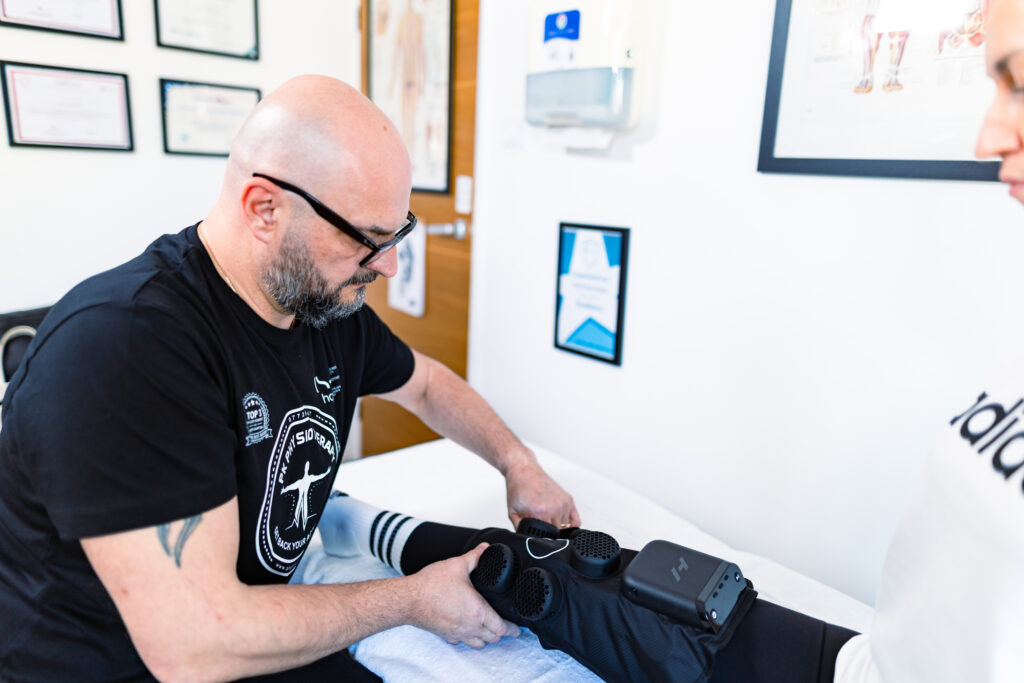
This is why ACL rehabilitation should be individually prescribed rather than based solely on a generic exercise sheet. At PK Physiotherapy, rehabilitation can include Specific Personalised Exercise Programmes based on the findings of the clinical assessment and the patient’s goals.
When Should an Orthopaedic Knee Surgeon Be Consulted?
An orthopaedic knee specialist opinion should be considered when there is:
• recurrent giving way
• significant functional or rotational instability
• inability to return to required sport despite appropriate rehabilitation
• inability to perform occupational requirements
• complete ACL rupture in a highly active patient
• associated meniscal injury
• significant cartilage injury
• injury involving additional knee ligaments
• persistent instability despite good strength and neuromuscular rehabilitation
• desire to return to demanding pivoting or contact sport
• uncertainty regarding whether reconstruction is appropriate
Consulting a surgeon does not mean that surgery must be performed.
It provides another important component of the decision making process and allows the patient to understand the surgical and non surgical options relevant to their particular injury.
ACL Repair and ACL Reconstruction
ACL repair and ACL reconstruction are not the same procedure.
ACL repair attempts to preserve and reattach the patient’s original ligament.
ACL reconstruction replaces the function of the damaged ACL using a graft.
Selected injuries may potentially be suitable for repair depending on factors such as tear location and tissue quality, but this is a specialist surgical decision.
Similarly, a partial ACL tear does not automatically mean that a patient requires a partial reconstruction.
The treatment pathway depends on the pattern of injury, functional stability, associated pathology, patient requirements and specialist assessment.
Rehabilitation Before ACL Surgery
When reconstruction is required, physiotherapy should not necessarily begin only after surgery.
Preoperative rehabilitation, commonly called prehabilitation, can prepare the knee and the patient for the operation and subsequent recovery.
Important goals may include:
• reducing swelling
• restoring full knee extension
• restoring good flexion
• normalising gait
• improving quadriceps activation
• rebuilding lower limb strength
• educating the patient about postoperative rehabilitation
The Aspetar Clinical Practice Guideline reports that preoperative rehabilitation may improve postoperative quadriceps strength and knee range of movement and may reduce the time required to return to the preinjury level of activity.
A stiff, swollen knee with poor quadriceps activation is generally not an ideal starting point for postoperative rehabilitation.
Rehabilitation After ACL Reconstruction
ACL reconstruction does not complete the rehabilitation process.
It begins another important stage.
Surgery restores mechanical stability through the graft, while rehabilitation aims to restore movement, strength, neuromuscular control, confidence and eventually the ability to tolerate the demands of work or sport.
The Aspetar Clinical Practice Guideline identifies exercise as the foundation of rehabilitation after ACL reconstruction. It also emphasises individualised progression based on functional criteria while respecting biological healing and graft protection.
More information about rehabilitation following surgery is available on the PK Physiotherapy Post Surgical Rehabilitation page.
Early Rehabilitation
Early rehabilitation commonly focuses on controlling pain and swelling, restoring knee extension, progressively restoring flexion, activating the quadriceps and regaining appropriate walking ability.
The programme must also protect the graft and respect any restrictions given by the surgeon.
When additional procedures such as meniscal repair have been performed, rehabilitation may need to be modified accordingly.
The NHS also emphasises early walking as advised by the physiotherapy team, home exercises and regular physiotherapy following ACL surgery.
Building Strength and Control
As movement improves and symptoms settle, rehabilitation progressively focuses on rebuilding quadriceps, hamstring, calf and hip strength.
Single leg control, proprioception, balance and movement quality become increasingly important.
Exercise remains the foundation of rehabilitation.
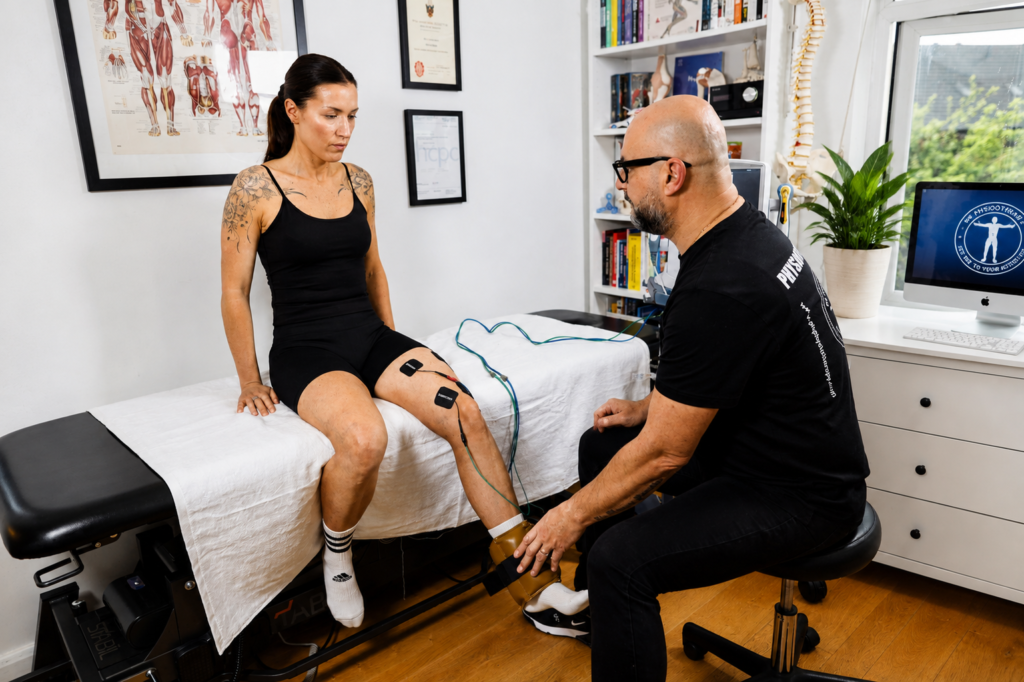
Selected physical modalities may sometimes be used as adjuncts during particular stages of recovery, but they should not replace progressive exercise and loading. Aspetar similarly describes physical therapy modalities as possible adjuncts, particularly during the early phase when pain, swelling or restricted movement limit exercise.
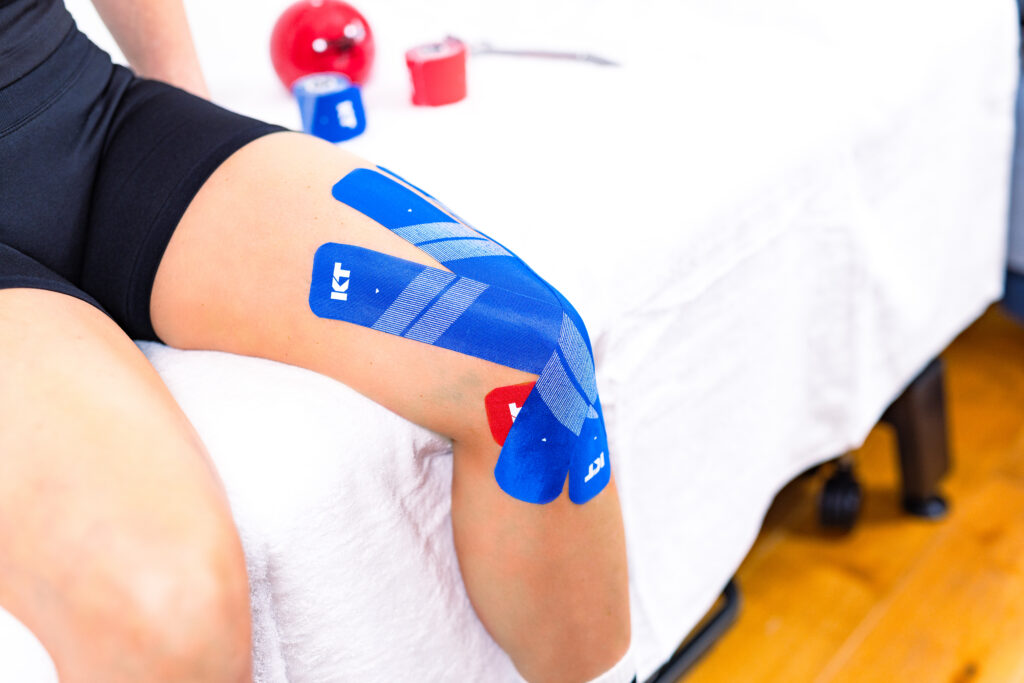
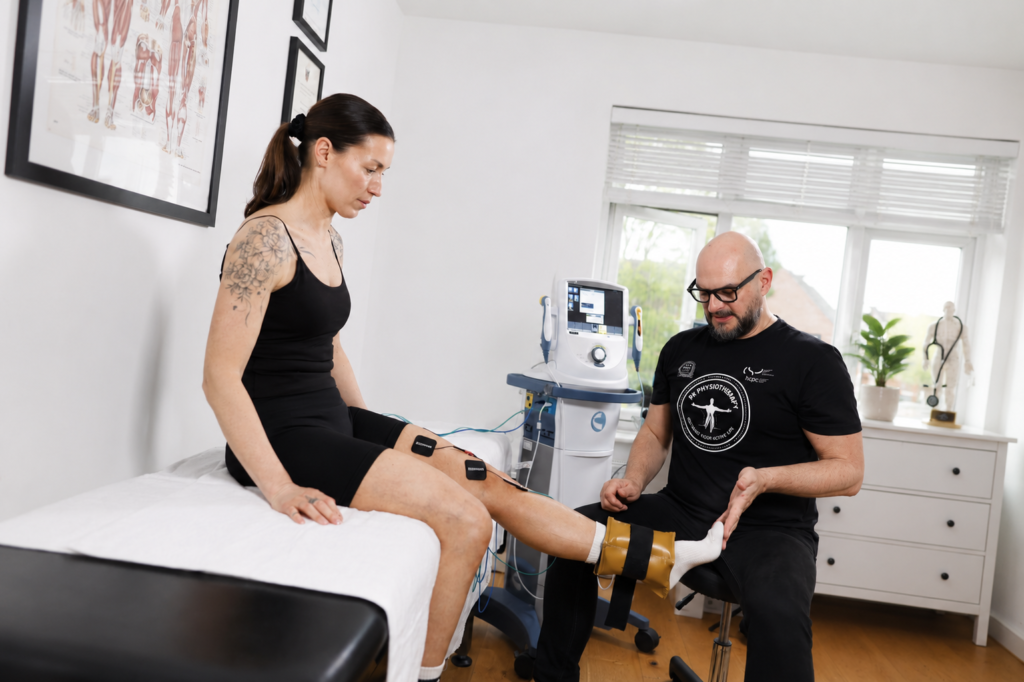
Depending on clinical findings, adjunctive treatments available at PK Physiotherapy may include Joint Mobilisation and Manipulation, Sports Massage, Electrotherapy using IFC and TENS and Kinesiology Taping.
Return to Running
Running should not begin simply because a particular number of weeks has passed.
Before progressing to running, factors such as swelling, pain, range of movement, quadriceps strength, load tolerance and movement quality should be considered.
Biological healing remains important, but time alone cannot tell us whether the knee is functionally ready.
Return to running is therefore a rehabilitation milestone rather than simply a date on the calendar.
Jumping, Landing and Change of Direction
Later rehabilitation may progressively introduce jumping, landing and hopping.
The patient needs to regain the ability not only to produce force but also to absorb and control it.
For patients returning to demanding sports, rehabilitation may subsequently include acceleration, controlled deceleration, lateral movement, planned changes of direction, reactive movements and sport specific drills.
The demands of a footballer, skier or rugby player are very different from those of a recreational runner, which is another reason why ACL rehabilitation needs to be individualised.
When Can I Return to Sport?
There is no single return date that applies to every patient.
The NHS states that recovery following ACL surgery may take several months or longer and that returning to sport can take up to a year.
However, time alone should not determine readiness.
Return to sport assessment may consider knee symptoms, full range of movement, strength, functional testing, hopping performance, movement quality, sport specific function, confidence and psychological readiness.
Aspetar proposes objective criteria for progression and emphasises that rehabilitation duration should be specific to the individual while respecting minimum requirements for graft protection and healing.
A patient should therefore not be considered ready for competitive sport simply because a certain number of months have passed.
ACL Rehabilitation Case Studies
Case Study 1: Grade 1 ACL Sprain
A 29 year old recreational runner twisted his knee when stepping awkwardly during a training run.
He developed mild swelling and discomfort but did not experience giving way.
Clinical assessment demonstrated a small reduction in knee movement and pain related inhibition of the quadriceps, while ligament stability remained good.
Treatment initially focused on restoring normal movement and gait before progressing to quadriceps, hamstring, calf and hip strengthening.
Single leg control, balance and proprioceptive exercises were then introduced.
Running was gradually reintroduced using shorter distances at an easy pace before speed and distance were progressively increased.
He returned to unrestricted recreational running without surgery.
Case Study 2: Grade 2 Partial ACL Tear
A 34 year old female skier sustained a twisting knee injury following an awkward fall.
MRI confirmed a partial ACL tear.
Initially she experienced swelling, reduced flexion and uncertainty when descending stairs or turning quickly.
Physiotherapy started with restoring extension and flexion and rebuilding quadriceps control.
Rehabilitation then progressed to lower limb strengthening, single leg stability, balance, proprioception, hopping, landing and progressively more demanding rotational control.
Over approximately three months her knee became progressively more stable and she stopped experiencing giving way.
Because she achieved good functional stability and could meet her activity goals through rehabilitation, reconstruction was not required.
The MRI identified the structural injury, but functional recovery ultimately determined the treatment pathway.
Case Study 3: Grade 3 Complete ACL Rupture in a Long Distance Runner
A 24 year old long distance runner sustained a non contact twisting injury halfway through a marathon when changing direction suddenly to avoid another runner.
He felt a clear pop in the knee and developed rapid swelling, forcing him to stop the race.
MRI confirmed a complete ACL rupture with an associated meniscal injury.
Initial physiotherapy focused on reducing swelling, restoring full extension, improving flexion, normalising gait and rebuilding quadriceps and hamstring strength.
Despite substantial improvements in strength, instability remained during rotational movements.
The patient’s goal was to return to unrestricted long distance running, road racing and demanding training.
Because of the persistent instability and associated meniscal injury, an orthopaedic knee consultation was recommended and he subsequently underwent ACL reconstruction.
Postoperative rehabilitation progressed through restoration of movement, strength, single leg control and progressive loading before running was reintroduced.
Short controlled runs gradually progressed to longer outdoor distances.
Later rehabilitation included hopping, landing, acceleration, deceleration and movement control.
Return to marathon training was based on functional recovery and objective testing rather than simply the number of months since surgery.
This case demonstrates why the ACL grade alone should not determine treatment. The structural injury, associated pathology, functional instability and patient’s goals all contributed to the final decision.
What About Meniscus Damage?
ACL injuries can occur together with meniscal damage.
This is clinically important because the menisci contribute to load distribution, joint function and knee stability.
Associated meniscal injury can influence the decision regarding surgery and may also change the postoperative rehabilitation programme.
For example, rehabilitation following an isolated ACL reconstruction may differ from rehabilitation following ACL reconstruction combined with meniscal repair.
This is another reason why treatment decisions should consider the complete knee injury rather than the ACL in isolation.
My Perspective After More Than 30 Years in Physiotherapy
After more than 30 years working in physiotherapy, one principle remains particularly important to me:
I do not treat an MRI scan. I treat the person standing in front of me.
Imaging can be extremely useful, but it represents only one part of the assessment.
I want to know how the injury happened, whether the knee gives way, how it moves, how strong it is and how it responds when progressively challenged.
Most importantly, I want to know what the patient needs to return to.
Walking the dog comfortably is one goal.
Running a marathon is another.
Returning to competitive football, rugby or skiing creates completely different demands again.
For some patients, structured physiotherapy restores excellent strength, control and confidence and reconstruction may not be necessary.
For others, rehabilitation improves strength considerably but persistent mechanical instability remains. In these circumstances, an orthopaedic knee specialist opinion becomes particularly important.
If reconstruction is required, physiotherapy remains essential both before surgery and throughout postoperative rehabilitation.
Successful ACL management therefore requires an individual clinical decision rather than treatment based solely on the wording of an MRI report.
Q&A
Does severe pain mean my ACL is completely ruptured?
No. Pain intensity does not reliably indicate the severity of ACL damage. A complete rupture may become relatively comfortable once the initial swelling settles, while a partial injury can remain painful.
Can I walk with a completely ruptured ACL?
Yes. Some patients regain relatively normal walking after the acute symptoms settle. Being able to walk does not prove that the ACL is intact.
I heard a pop when I injured my knee. Does that mean my ACL has ruptured?
Not necessarily. A pop is frequently reported with ACL injuries, but it cannot confirm either the diagnosis or grade by itself.
Does a Grade 2 ACL tear require surgery?
Not automatically. Many partial tears can be managed successfully with structured rehabilitation when adequate functional stability remains. Persistent instability requires further assessment.
Does a Grade 3 ACL rupture always require reconstruction?
No. Selected patients can achieve satisfactory function without reconstruction. The decision depends on functional instability, associated injuries, activity requirements and response to rehabilitation.
Can physiotherapy heal a completely ruptured ACL?
The primary objective of physiotherapy is to restore movement, strength, neuromuscular control and functional stability rather than physically reconnect the ligament.
Research has identified MRI evidence of ACL fibre continuity in a proportion of patients initially managed with rehabilitation alone. However, this should not be interpreted as guaranteed biological healing or proof that normal ACL function has been restored.
How long should I try physiotherapy before considering surgery?
There is no universal number of weeks that applies to everyone.
The decision depends on functional stability, associated injuries, rehabilitation progress and what the patient needs to return to.
Why have physiotherapy before ACL surgery?
Preoperative rehabilitation can help reduce swelling, restore movement and improve quadriceps activation and lower limb strength before reconstruction. It also prepares the patient for the rehabilitation process that follows surgery.
How long does rehabilitation after ACL reconstruction take?
Recovery varies considerably between patients.
Daily activities usually return much earlier than demanding sport. The NHS states that returning to sport can take up to a year, while modern rehabilitation guidelines also emphasise functional criteria rather than relying solely on time.
What should I do if my knee keeps giving way?
Repeated giving way should not simply be ignored.
It suggests insufficient functional stability and requires reassessment. Depending on the findings, associated injuries and your goals, an orthopaedic knee specialist opinion may be appropriate.
Conclusion
An ACL injury does not automatically mean surgery.
Grade 1 injuries are generally managed conservatively. Many Grade 2 injuries can also respond extremely well to structured rehabilitation, while selected patients with complete ACL rupture may achieve satisfactory function without reconstruction.
Surgery nevertheless has an important role when significant functional instability remains, the knee repeatedly gives way, associated injuries require surgical management or the patient’s occupational or sporting requirements cannot be achieved safely through rehabilitation alone.
The treatment decision should therefore not be reduced to the grade written on an MRI report.
The important question is:
What does this knee need to safely return this individual patient to the life, work or sport they want?
Book Your Physiotherapy Assessment
If you have recently injured your knee, received an MRI report showing an ACL injury or are unsure whether physiotherapy or an orthopaedic opinion should be your next step, a detailed assessment can help establish the functional consequences of the injury and guide your rehabilitation.
At PK Physiotherapy Northampton, assessment considers your symptoms, clinical findings, knee stability, strength, functional requirements and personal goals rather than relying on an MRI report alone.
Useful information related to ACL injury and rehabilitation is also available on:
Knee Pain
Sports Injuries
Post Surgical Rehabilitation
Initial Physiotherapy Assessment
Specific Personalised Exercise Programmes
Joint Mobilisation and Manipulation
Sports Massage
Electrotherapy IFC and TENS
Kinesiology Taping
Medical Evidence and Further Reading
AAOS Clinical Practice Guideline: Management of Anterior Cruciate Ligament Injuries
Aspetar Clinical Practice Guideline on Rehabilitation after ACL Reconstruction
Aspetar ACL Rehabilitation Guideline, British Journal of Sports Medicine
NHS: Recovering from ACL Surgery
Library
American Academy of Orthopaedic Surgeons: Management of Anterior Cruciate Ligament Injuries Clinical Practice Guideline
Aspetar Clinical Practice Guideline on Rehabilitation after ACL Reconstruction
Aspetar Clinical Practice Guideline, British Journal of Sports Medicine
Aspetar Clinical Practice Guideline, PubMed
KANON Trial: Five Year Outcome of Early ACL Reconstruction versus Rehabilitation with Optional Delayed Reconstruction
KANON Trial, Full BMJ Article
COMPARE Randomised Controlled Trial: Early ACL Reconstruction versus Rehabilitation with Optional Delayed Reconstruction
COMPARE Trial, PubMed
NHS: Recovering from ACL Surgery
MRI Evidence of ACL Healing after Rehabilitation, PubMed
Long Term ACL Continuity and Clinical Outcomes, PubMed